Research output

Publications

Journal articles, conference papers and preprints by lab members. Lab members are shown in bold; each entry links its paper, project page and code.

43 publications

2026

Preprint2026 2nd revision

Human-to-Robot Interaction: Learning from Video Demonstration for Robot Imitation

Thanh Nguyen Canh, Tuan Thanh Tran, Xiem HoangVan, Nak Young Chong

PaperarXiv Code Project
Abstract

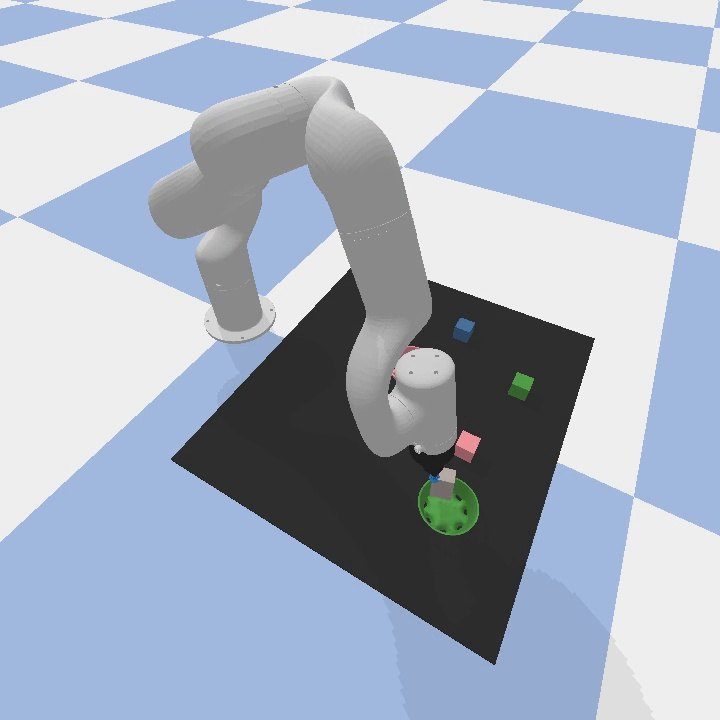
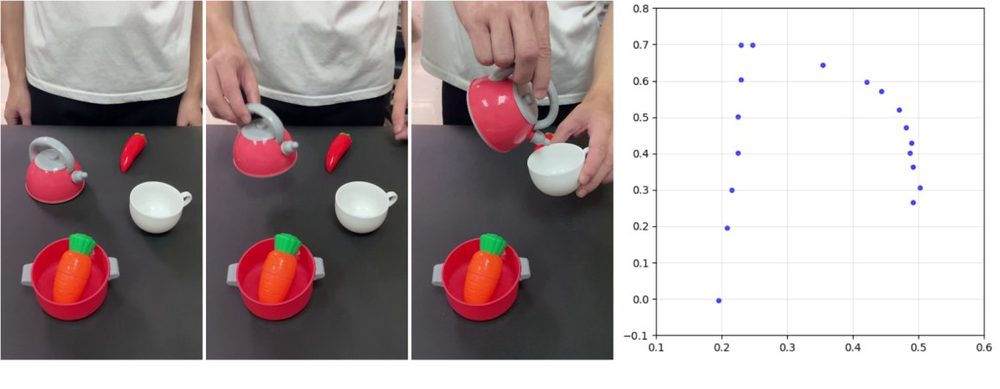
Robotic manipulation through learning from demonstration aims to enable robots to acquire various actions efficiently. Unlike traditional learning from observation-action pairs, which is time-consuming and requires proficiency in coding. Our approach is inspired by the way humans learn and imitate actions in a more flexible and efficient manner by simply "watching" and "repeating" the actions. Inspired by this, we propose a "Human-to-Robot" imitation learning pipeline, which enables robots to learn diverse actions from video demonstrations. Specifically, we explicitly represent each step as two key tasks: (1) understanding the demonstration video and (2) learning the demonstrated manipulations. First, the video description is achieved by focusing on two essential commonsense properties: action understanding and object understanding. We utilize deep Convolutional Neural Networks (CNNs) and Large Vision Models (VLMs) to extract meaningful features related to these properties. Then, for execution, we develop a robot manipulation system built upon a Language Vision-conditioned architectures and Deep Reinforcement Learning. Experiments with real-world video demonstrations. The results show the robustness and adaptability of the two frameworks in various scenarios using a real robotic arm UR5.

BibTeX
@misc{human-to-robot,
  title = {Human-to-Robot Interaction: Learning from Video Demonstration for Robot Imitation},
  author = {Thanh Nguyen Canh and Tuan Thanh Tran and Xiem HoangVan and Nak Young Chong},
  eprint = {2602.19184},
  archivePrefix = {arXiv},
  note = {Preprint, 2nd revision},
  year = {2026}
}
Preprint2026 under review

Con-DSO: Learning Short-Horizon Consistency Priors for RGB-D Direct Sparse Odometry

Haolan Zhang, Thanh Nguyen Canh, C. Li, Z. Gao, X. Jiang, Nak Young Chong

Abstract

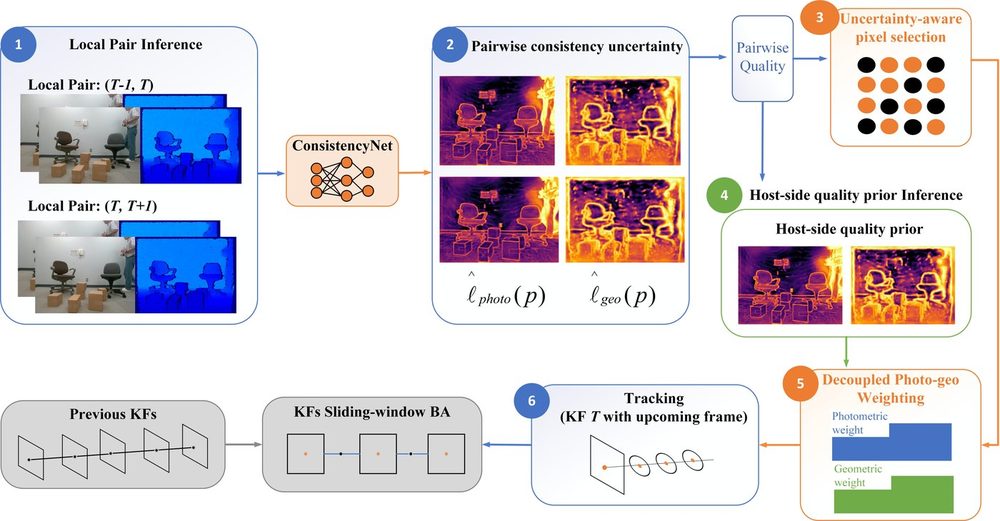
RGB-D direct visual odometry (VO) benefits from metric depth measurements but often degrades in the presence of dynamic objects, occlusions, illumination changes, and unreliable depth, which violate the photometric and geometric consistency assumptions of direct alignment. We propose Con-DSO, a consistency-aware RGB-D direct sparse odometry framework that addresses these challenges through a unified learned uncertainty model. A dual-branch consistency network is trained on adjacent RGB-D frame pairs using flow-guided photometric errors and projective depth-consistency errors to predict pixel-level photometric and geometric uncertainty. The predicted uncertainty is first converted into pairwise quality to guide support-pixel selection and is then fused across adjacent frame pairs to form a host-side quality prior for keyframe-based tracking. To account for the different roles of photometric and depth information in direct RGB-D optimization, the quality prior is incorporated through a decoupled photometric-geometric weighting scheme, with the geometric weight applied only to the translational component of pose estimation. Experiments on five public RGB-D benchmarks demonstrate consistent improvements over direct RGB-D odometry baselines, achieving more than 20\% reduction in absolute trajectory error on ICL-NUIM and approximately 50\% to 80\% reductions on RGB-D Scenes V2, TUM/BONN, and OpenLORIS. These results demonstrate that learned consistency-aware uncertainty can substantially improve the robustness of RGB-D direct visual odometry in challenging environments.

BibTeX
@misc{con-dso,
  title = {Con-DSO: Learning Short-Horizon Consistency Priors for RGB-D Direct Sparse Odometry},
  author = {Haolan Zhang and Thanh Nguyen Canh and C. Li and Z. Gao and X. Jiang and Nak Young Chong},
  eprint = {2605.27952},
  archivePrefix = {arXiv},
  note = {Preprint, under review},
  year = {2026}
}
Preprint2026 under review

Monocular vSLAM for Colonoscopy: Recent Advances, Benchmarking, and Future Perspectives

Duc Manh Do, Van Bang Nguyen, Thanh Nguyen Canh, Mai Thanh Thai, Xiem HoangVan

PaperarXivCodeProject
Abstract

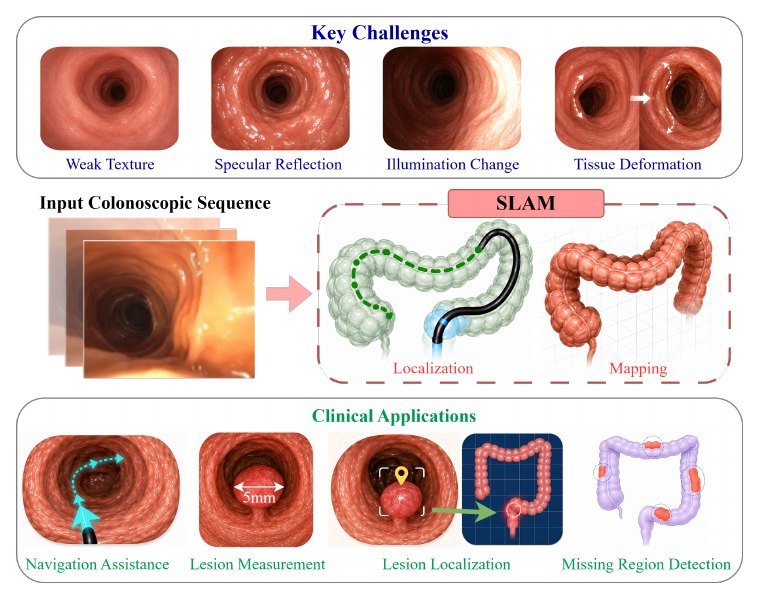
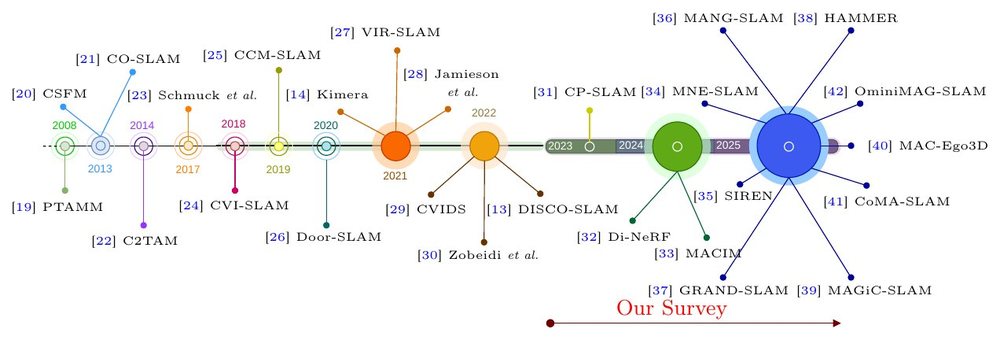
Colonoscopy is the gold standard for colorectal cancer screening, yet its limited field of view constrains spatial awareness, mucosal coverage assessment, and reliable lesion localization. Monocular visual simultaneous localization and mapping (vSLAM) has emerged as a promising approach for reconstructing three-dimensional (3D) colonic anatomy and estimating endoscope motion from standard colonoscopic video without additional sensing hardware. However, the colonoscopic environment poses substantial challenges, including weak and repetitive texture, specular reflections, illumination variability, and tissue deformation. This survey provides a comprehensive review of monocular vSLAM for colonoscopy, tracing its evolution from classical feature-based and direct methods to learning-based approaches, neural scene representations, and deformation-aware formulations. We summarize representative systems, publicly available datasets, evaluation protocols, and emerging clinical applications, while critically analyzing how existing methods address the unique constraints of colonoscopic imaging. Furthermore, we present a unified benchmarking study of representative monocular vSLAM approaches on the C3VDv1 dataset, enabling direct comparison of localization accuracy and reconstruction quality under a standardized evaluation framework. Finally, we discuss key open challenges, including dataset realism, standardized benchmarking, uncertainty-aware depth estimation, non-rigid reconstruction, semantic integration, and clinical validation, and outline future research directions toward robust, accurate, and clinically deployable monocular vSLAM systems for colonoscopy.

BibTeX
@misc{monocular-vslam-colonoscopy-survey,
  title = {Monocular vSLAM for Colonoscopy: Recent Advances, Benchmarking, and Future Perspectives},
  author = {Duc Manh Do and Van Bang Nguyen and Thanh Nguyen Canh and Mai Thanh Thai and Xiem HoangVan},
  note = {Preprint, under review},
  year = {2026}
}
Preprint2026 under review

Collaborative SLAM in the Era of 3D Gaussian Splatting: Architectures, Methods, and Future Directions

Phuc Nguyen Xuan, Thanh Nguyen Canh, Huu-Hung Nguyen, Nak Young Chong, Xiem HoangVan

Abstract

Multi-robot Simultaneous Localization and Mapping (SLAM) demands scene representations that are simultaneously real-time, high-fidelity, and fusable across agents. Neither sparse feature maps nor neural implicit fields fully satisfy these three requirements. 3D Gaussian Splatting (3DGS) renders explicit Gaussian primitives through differentiable rasterization, offering both speed and photorealism. However, its dense, continuously optimized submaps strain communication budgets and require radiometric and geometric consistency across agents. This survey reviews Collaborative Gaussian Splatting SLAM (CoGS-SLAM), an emerging class of systems that build a shared Gaussian world model across robot teams. We propose an architecture-based taxonomy that contrasts centralized designs, which still dominate due to the computational and synchronization demands of 3DGS, with nascent distributed alternatives. We then provide a problem-oriented analysis of four core challenges: inter-agent correspondence and association, multi-agent registration and alignment, multi-agent consistency maintenance, and communication-efficient collaboration. Beyond individual systems, we identify cross-cutting design patterns, ranging from shared semantic representations to hierarchical scene organization and asynchronous fusion. We further review benchmark datasets and evaluation metrics, and compare representative systems in terms of tracking accuracy, rendering and map-fusion quality, and communication cost and scalability. This comparison highlights how submap-level optimization and consensus-based pose estimation underpin recent performance gains. Finally, we outline open challenges, including information-aware Gaussian sharing beyond compression, lifelong collaborative mapping, semantic and instance-level understanding, multi-modal fusion across heterogeneous robot teams, and Sim2Real robustness. This survey offers newcomers a structured map of the field and provides system designers with concrete criteria for selecting architectures, representations, and communication strategies.

BibTeX
@misc{collaborative-gaussian-splatting-slam-survey,
  title = {Collaborative SLAM in the Era of 3D Gaussian Splatting: Architectures, Methods, and Future Directions},
  author = {Phuc Nguyen Xuan and Thanh Nguyen Canh and Huu-Hung Nguyen and Nak Young Chong and Xiem HoangVan},
  eprint = {2510.23988},
  archivePrefix = {arXiv},
  note = {Preprint, under review},
  year = {2026}
}
JournalIEEE Robotics and Automation Letters (RA-L) · 2026

BPDA-GMM: Bayesian Probabilistic Data Association via Gaussian Mixture Models for Semantic SLAM

Thanh Nguyen Canh, Haolan Zhang, Antonio Sgorbissa, Xiem HoangVan, Nak Young Chong

Abstract

Probabilistic data association (PDA) improves semantic SLAM under perceptual aliasing. However, existing formulations birth new landmarks from hand-tuned null weights or fixed gates, and they either freeze association weights at observation time or recompute them as the map grows. Accumulated association evidence is therefore not carried forward. To address these limitations, we propose BPDA-GMM, an online Bayesian PDA framework for semantic SLAM with a growing object map. BPDA-GMM formulates association as a Chinese Restaurant Process (CRP)-weighted Gaussian mixture posterior over existing landmarks and a new-landmark hypothesis. The CRP prior accumulates association evidence in O(1) counts and calibrates landmark birth to the scene. A semantic-geometric likelihood gates candidates, and ambiguity-triggered tempering sharpens the posterior only when no dominant hypothesis exists. The soft posterior updates semantic Gaussian landmarks in the front-end, and mature dominant components become decoupled max-mixture factors in the back-end. Experiments in simulation and on real indoor and outdoor datasets show that BPDA-GMM reduces duplicate landmarks and improves trajectory accuracy, semantic map quality, and robustness to perceptual aliasing and classifier errors.

BibTeX
@article{bayesian-probabilistic-data-association,
  title = {BPDA-GMM: Bayesian Probabilistic Data Association via Gaussian Mixture Models for Semantic SLAM},
  author = {Thanh Nguyen Canh and Haolan Zhang and Antonio Sgorbissa and Xiem HoangVan and Nak Young Chong},
  journal = {IEEE Robotics and Automation Letters (RA-L)},
  doi = {10.1109/lra.2026.3726389},
  year = {2026}
}
JournalRobotics and Autonomous Systems · 2026

Semantic Visual Simultaneous Localization and Mapping: A survey on state of the art, challenges, and future directions

Thanh Nguyen Canh, Haolan Zhang, Xiem HoangVan, Nak Young Chong

Abstract

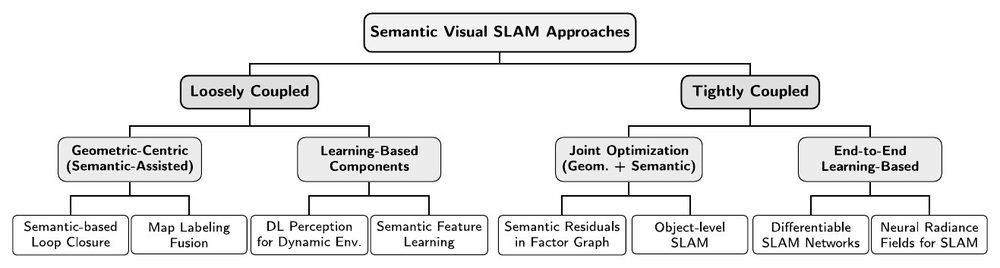
Semantic Visual Simultaneous Localization and Mapping (Semantic vSLAM) is a critical area of research in robotics and computer vision, focusing on the simultaneous localization of robotic systems and the association of semantic information to construct the most accurate and comprehensive model of the surrounding environment. Since the first foundational work on Semantic vSLAM appeared more than two decades ago, the field has attracted increasing attention across various scientific communities. Despite its significance, the field lacks comprehensive surveys encompassing recent advances and persistent challenges. In response, this study provides a thorough examination of the state-of-the-art of Semantic vSLAM techniques, with the aim of illuminating current trends and key obstacles. Beginning with an in-depth exploration of the evolution of visual SLAM, this study outlines its strengths and unique characteristics while also critically assessing previous survey literature. Subsequently, a unified problem formulation and evaluation of the modular solution framework is proposed, which decomposes the problem into discrete stages, including visual localization, semantic feature extraction, mapping, data association, and loop closure optimization. Moreover, this study investigates alternative methodologies such as deep learning and the utilization of large language models, alongside a review of relevant research about contemporary SLAM datasets. Concluding with a discussion on potential future research directions, this study serves as a comprehensive resource for researchers seeking to navigate the complex landscape of Semantic vSLAM.

BibTeX
@article{semantic-visual-slam-survey,
  title = {Semantic Visual Simultaneous Localization and Mapping: A survey on state of the art, challenges, and future directions},
  author = {Thanh Nguyen Canh and Haolan Zhang and Xiem HoangVan and Nak Young Chong},
  journal = {Robotics and Autonomous Systems},
  doi = {10.1016/j.robot.2026.105535},
  year = {2026}
}
JournalRobotics and Autonomous Systems · 2026

SR-SLAM: Scene reliability-based RGB-D SLAM in diverse environments

Haolan Zhang, Chenghao Li, Thanh Nguyen Canh, Lijun Wang, Nak Young Chong

Abstract

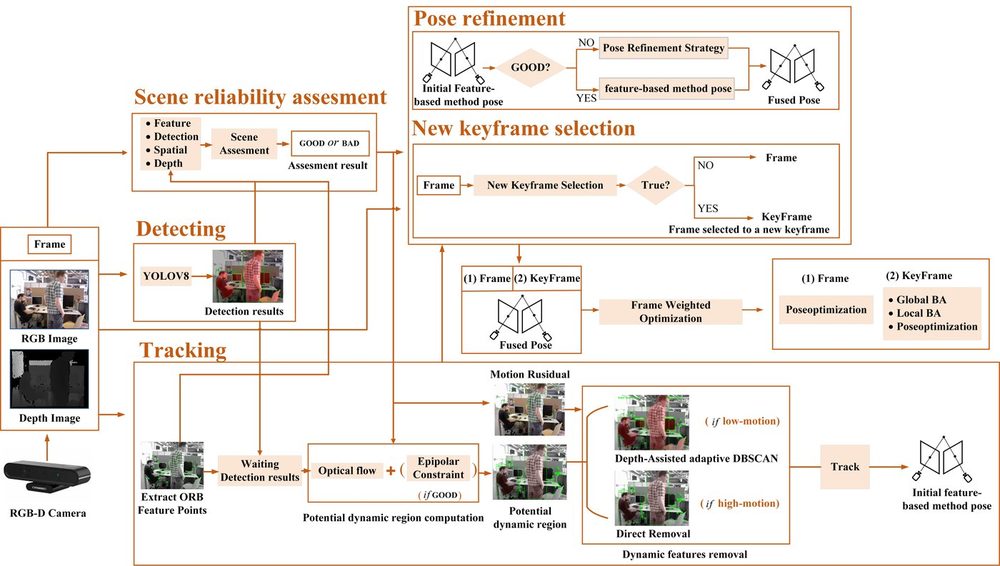
Visual simultaneous localization and mapping (SLAM) plays a critical role in autonomous robotic systems, especially where accurate and reliable measurements are essential for navigation and sensing. In feature-based SLAM, the quantity and quality of extracted features significantly influence system performance. Due to the variations in feature quantity and quality across diverse environments, current approaches face two major challenges: (1) limited adaptability in dynamic feature culling and pose estimation, and (2) insufficient environmental awareness in assessment and optimization strategies. To address these issues, we propose SR-SLAM, a scene reliability-based framework that enhances feature-based SLAM through environment-aware processing. Our method introduces a unified scene reliability assessment mechanism that incorporates multiple metrics and historical observations to guide system behavior. Based on this assessment, we develop: (i) adaptive dynamic region selection with flexible geometric constraints, (ii) depth-assisted self-adjusting clustering for efficient dynamic feature removal in high-dimensional settings, and (iii) reliability-aware pose refinement that dynamically integrates direct methods when features are insufficient. Furthermore, we propose (iv) reliability-based keyframe selection and a weighted optimization scheme to reduce computational overhead while improving estimation accuracy. Extensive experiments on public datasets and real-world scenarios show that SR-SLAM outperforms state-of-the-art dynamic SLAM methods, achieving up to 90% improvement in accuracy and robustness across diverse environments. These improvements directly contribute to enhanced measurement precision and reliability in autonomous robotic sensing systems.

BibTeX
@article{sr-slam,
  title = {SR-SLAM: Scene reliability-based RGB-D SLAM in diverse environments},
  author = {Haolan Zhang and Chenghao Li and Thanh Nguyen Canh and Lijun Wang and Nak Young Chong},
  journal = {Robotics and Autonomous Systems},
  doi = {10.1016/j.robot.2025.105306},
  year = {2026}
}
Preprint2026 under review

Toward Probabilistically Consistent Visual-Inertial SLAM with Learned Feature Uncertainty and Metric Depth Priors

Thanh Nguyen Canh, Haolan Zhang, Xiem HoangVan, Nak Young Chong

PaperarXivCode Project
Abstract

Keyframe visual-inertial SLAM weights every feature by a content-blind covariance, commits its initialization on a timer, and takes metric scale from excitation alone. UC-SLAM, built on ORB-SLAM3, tests a replacement for each under a registered protocol. Foundation-model metric depth enters through a log-depth factor with a per-keyframe log-scale chain designed to absorb the network's scene-dependent bias. Among the systems rerun on EuRoC and TUM-VI, UC-SLAM has the lowest monocular-inertial mean error in all five environments, with three changes adopted after the benchmark by a registered test. One caps a scale refinement of ORB-SLAM3, whose rows run without it. The magistrale lead rests on one sequence. The same depth fed to ORB-SLAM3 as RGB-D is worse on every EuRoC sequence. On OpenLORIS-Scene, a ground robot added later, UC-SLAM passes 20 of 200 runs and VINS-Fusion 120. A learned anisotropic feature covariance and an initializer that commits on marginal uncertainty gave no gain and were dropped. Neither ORB-SLAM3 nor UC-SLAM reports a consistent posterior, and the Vicon reference is too coarse for the test. The code is available at https://anonymous.4open.science/r/uc-slam/.

BibTeX
@misc{uc-slam,
  title = {Toward Probabilistically Consistent Visual-Inertial SLAM with Learned Feature Uncertainty and Metric Depth Priors},
  author = {Thanh Nguyen Canh and Haolan Zhang and Xiem HoangVan and Nak Young Chong},
  note = {Preprint, under review},
  year = {2026}
}
Preprint2026 under review

USGLoc: Uncertainty-Aware Semantic Visual Localization from 3D Gaussian Splatting

Thanh Nguyen Canh, Xiem HoangVan, Nak Young Chong

Abstract

A visual localizer should tell a robot where the camera is and how much to trust that answer, because the pose is fused into a Bayesian state estimator. Recent semantic 3D Gaussian Splatting (3DGS) localizers are accurate but return a single pose with no confidence, while uncertainty-aware mapping methods quantify map reliability but do not localize. We present USGLoc, an evidential localizer built on one principle: the map's own uncertainty drives every stage and survives to the output. Each primitive of an evidential semantic Gaussian map carries a Dempster-Shafer belief over open-vocabulary semantics with an explicit vacuity mass, and the query is encoded into the same space. Vacuity gates 2D-3D semantic matching, which turns retrieval ambiguity into a pose mixture; it gates the correspondences of a render-and-match correction; and it weights the rendering residual per pixel. A tempered Laplace approximation turns each refined hypothesis into a covariance, giving a Gaussian-mixture posterior on SE(3) that condenses to one Gaussian for a filter. Without an external pose prior, USGLoc localizes to 0.83 cm/0.26° on average on 7Scenes and 0.62 cm/0.26° on 12Scenes. The poses it trusts most are the most accurate in our comparison: 0.30 cm on its most-confident tenth of the 7Scenes queries, against 0.46 cm for a strong scene-coordinate baseline ranked by a PnP covariance. The tempered covariance is close to nominal at the 68% level and over-confident in the tails.

BibTeX
@misc{usgloc,
  title = {USGLoc: Uncertainty-Aware Semantic Visual Localization from 3D Gaussian Splatting},
  author = {Thanh Nguyen Canh and Xiem HoangVan and Nak Young Chong},
  note = {Preprint, under review},
  year = {2026}
}
Preprint2026 submitted

Uncertainty-Aware Open-Vocabulary Gaussian Splatting for Changing Scenes

Thanh Nguyen Canh, Haolan Zhang, Xiem HoangVan, Nak Young Chong

PaperarXivCode Project
Abstract

A robot that reuses a semantic map must know how much evidence supports each part of it and when this evidence is out of date. We present a probabilistic open-vocabulary field for 3D Gaussian Splatting that addresses both. Each Gaussian holds a von Mises-Fisher posterior over the direction of its vision-language feature, and each keyframe counts as at most one observation. The sufficient statistics give two uncertainties: an epistemic one, the weighted number of views, and an aleatoric one, the agreement of the views, which does not shrink when evidence is scarce. A feature residual detects change, with a label-free threshold from the map's own mapping pass. A flagged Gaussian is reset and rejoins the robust map only once its observed depth matches its position. With few views, the epistemic uncertainty ranks the errors that more views fix (6/6 Replica test scenes); with many views, the aleatoric one ranks the errors that remain (6/6 Replica, 8/8 ScanNet). On ten real scenes in which an object was removed, the reset lowers the share of the object's former pixels that still answer its class from 34% (averaging) to 21%. The field matches averaging the same features, is better calibrated than trained maps, and builds its semantic layer two orders of magnitude faster. As a ranker of stale Gaussians, our field read over the whole update matches the strongest baseline (AP 64.6 vs 64.7) but trails it when both are fused with depth (81.0 vs 84.9).

BibTeX
@misc{uags,
  title = {Uncertainty-Aware Open-Vocabulary Gaussian Splatting for Changing Scenes},
  author = {Thanh Nguyen Canh and Haolan Zhang and Xiem HoangVan and Nak Young Chong},
  note = {Preprint, submitted},
  year = {2026}
}

Preprint2026 submitted

Which Objects Stay? Learning Hierarchical Persistence Beliefs for Lifelong Open-Vocabulary Object Maps

Thanh Nguyen Canh, Haolan Zhang, Nak Young Chong

Abstract

Lifelong object maps must estimate whether an object remains at its previously observed location after it leaves view. Existing persistence filters rely on class-based survival priors, making them difficult to apply reliably in open-vocabulary settings. We introduce HiPer, a hierarchical persistence filter that derives persistence beliefs directly from data rather than semantic categories. For a new object, HiPer retrieves visually and geometrically similar training instances and estimates an initial survival rate from their observed histories, without requiring class labels. This estimate initializes a conjugate Beta belief over the object's survival probability, which is updated in closed form using detections and missed observations under Rosen’s persistence-filter framework. When an object is re-identified at a new location, its persistence belief is transferred with the object, enabling the map to learn object-specific mobility over time. Experiments on 120 held-out simulated sequences show that HiPer outperforms all compared methods. Retrieval-based priors outperform CLIP-derived label priors, and object-specific online learning provides further gains. Results on 47 held-out 3RScan environments demonstrate that the proposed retrieval-based prior also outperforms state-of-the-art baselines in real-world settings.

BibTeX
@misc{hiper,
  title = {Which Objects Stay? Learning Hierarchical Persistence Beliefs for Lifelong Open-Vocabulary Object Maps},
  author = {Thanh Nguyen Canh and Haolan Zhang and Nak Young Chong},
  eprint = {2611.07662},
  archivePrefix = {arXiv},
  note = {Preprint, submitted},
  year = {2026}
}

Preprint2026 under review

From Semantic to Affordances: Hierarchical Evidential Semantic-Functional Mapping

Thanh Nguyen Canh, Haolan Zhang, Xiem HoangVan, Nak Young Chong

PaperarXivCodeProject
Abstract

A robot that navigates from a semantic map inherits every silent error of the network that built it. Existing evidential mapping methods summarize this risk as a single classification-derived scalar, and they stop at a labeled map. A planner then cannot tell why a cell is unreliable, or how it may be used. We present HESFM. It separates a structural semantic map from a functional affordance layer, and threads one evidential signal between them, from pixel to plan. This echoes the neuroimaging distinction between structural connectivity (diffusion tensor imaging) and functional connectivity (fMRI). An Evidential Deep Learning (EDL) head replaces the segmentation softmax. It yields a per-pixel Dirichlet in a single forward pass, which gives calibrated class probabilities and a vacuity scalar. We decompose each cell's uncertainty into four physical sources (evidential, coherence, geometric, and temporal). Dempster-Shafer combination recombines them into a vacuity, together with a conflict mass that rises at class boundaries. We measure this decomposition rather than assume it, and the measurement is two-sided. Adding sources raises map accuracy slightly (52.2 -> 52.7 mIoU) while costing the fused vacuity as a detector of wrong labels (28.4 -> 26.9 AUPRC). The evidential source alone remains the better scalar, and the three non-evidential sources are far weaker on their own (11.5 to 13.8 AUPRC), so the decomposition earns its place as diagnosis rather than as a single number. [...]

BibTeX
@misc{hesfm,
  title = {From Semantic to Affordances: Hierarchical Evidential Semantic-Functional Mapping},
  author = {Thanh Nguyen Canh and Haolan Zhang and Xiem HoangVan and Nak Young Chong},
  note = {Preprint, under review},
  year = {2026}
}

Preprint2026 under review

Efficient Continuous Semantic Mapping based on Spatio-Temporal Awareness

My Le Pham, Dinh Trieu Duong, Xiem HoangVan, Thanh Nguyen Canh

PaperarXiv CodeProject
Abstract

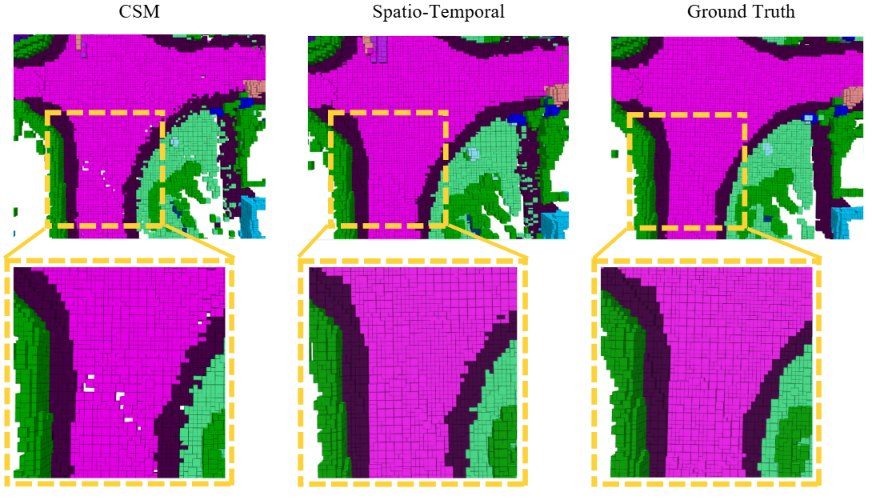
Continuous semantic mapping allows autonomous robots to understand both the spatial structure and the semantic content of complex environments. However, most existing methods process the entire space, treat voxels as independent units, and do not keep the semantic labels consistent over time. This leads to high computational cost and reduced robustness in dynamic scenes. This paper proposes a semantic mapping method that brings spatial and temporal relationships into the semantic inference process. The method adjusts the inference range according to the local semantic uncertainty and fuses labels over time to improve map stability and computational efficiency. Experiments on the SemanticKITTI dataset show that the proposed method improves mapping accuracy by about 12% and reaches an mIoU of 54.92%, which is 13.18 percentage points higher than spatial-only mapping. These results show that spatiotemporal reasoning is effective for continuous semantic mapping in autonomous robotic systems.

BibTeX
@misc{continuous-semantic-mapping,
  title = {Efficient Continuous Semantic Mapping based on Spatio-Temporal Awareness},
  author = {My Le Pham and Dinh Trieu Duong and Xiem HoangVan and Thanh Nguyen Canh},
  eprint = {2606.22672},
  archivePrefix = {arXiv},
  note = {Preprint, under review},
  year = {2026}
}

ConferenceInternational Conference on Control, Automation and Systems (ICCAS) · 2026

Decoupled Object-Centric Video Understanding for Generating Robotic Manipulation Commands

Thanh Nguyen Canh, Tuan Thanh Tran, Haolan Zhang, Z. Gao, Xiem HoangVan, Nak Young Chong

PaperarXiv CodeProject
Abstract

Translating video demonstrations into executable robot commands remains challenging because existing methods often fail to identify which objects are functionally involved in the demonstrated action. As a result, they may generate commands that are linguistically plausible but operationally ambiguous. We propose an object-centric video understanding framework that decouples action recognition from object identification to generate precise, grammar-free manipulation commands. Our approach integrates Temporal Shift Modules (TSM) for efficient spatio-temporal action classification with a novel Object Selection algorithm that identifies task-relevant objects through trajectory-based role classification, blur detection, and overlap minimization. The selected objects are then processed by Vision-Language Models (VLMs) for robust category recognition and zero-shot generalization. Evaluated on a modified Something-Something V2 dataset, our method achieves 86.79% action classification accuracy and BLEU-4 scores of 0.337 on standard objects and 0.261 on novel objects. These results improve over the strongest task-specific baseline by 80.2% and 143.9%, respectively. Larger gains are observed in METEOR and CIDEr, reaching 157.9% and 171.7% on novel objects. Across all semantic metrics, our approach consistently outperforms task-specific methods and remains competitive with, or surpasses, large general-purpose VLMs while retaining a modular, object-centric design.

BibTeX
@inproceedings{decoupled-object-centric-video-understanding,
  title = {Decoupled Object-Centric Video Understanding for Generating Robotic Manipulation Commands},
  author = {Thanh Nguyen Canh and Tuan Thanh Tran and Haolan Zhang and Z. Gao and Xiem HoangVan and Nak Young Chong},
  booktitle = {International Conference on Control, Automation and Systems (ICCAS)},
  year = {2026}
}

ConferenceInternational Conference on Control, Automation and Systems (ICCAS) · 2026

OWaveSync: Constrained Wavefront Optimization for Synchronized Co-Speech Gestures in Humanoid Robots

Thanh Nguyen Canh, Thang Tran Viet, G. H. Uong, P. V. Dinh, T. V. T. Nguyen, Xiem HoangVan, Nak Young Chong

PaperarXiv Code Project
Abstract

Expressive co-speech gestures are crucial for natural human–robot interaction, yet generating them on physical humanoid robots remains challenging because, unlike virtual avatars, robots must synchronize gestures with speech under strict kinematic and actuator constraints. We present WaveSync, a hybrid framework in which a Large Language Model decomposes dialogue responses into structured semantic schemas and assigns per-word importance weights, forming a continuous Semantic Importance Wave. Gesture trajectories are shaped through Dynamic Movement Primitives to ensure kinematic feasibility while enhancing expressiveness. A Wavefront Optimization stage aligns gesture stroke peaks with speech emphasis peaks and resolves residual temporal conflicts through gesture-duration compression and forward propagation. Experimental evaluation across five dialogue scenarios demonstrates effective gesture–speech alignment and favorable performance in both objective and subjective evaluations. The results further show that the key components of WaveSync contribute to producing gestures that are expressive, semantically grounded, and kinematically feasible. The code, resources, and videos are available at WaveSync.

BibTeX
@inproceedings{owavesync,
  title = {OWaveSync: Constrained Wavefront Optimization for Synchronized Co-Speech Gestures in Humanoid Robots},
  author = {Thanh Nguyen Canh and Thang Tran Viet and G. H. Uong and P. V. Dinh and T. V. T. Nguyen and Xiem HoangVan and Nak Young Chong},
  booktitle = {International Conference on Control, Automation and Systems (ICCAS)},
  year = {2026}
}

ConferenceInternational Conference on Control, Automation and Systems (ICCAS) · 2026

OSDAG: Online Scheduling for Efficient Multi-Robot Collaboration

Thanh Nguyen Canh, Thang Tran Viet, P. V. Dinh, Xiem HoangVan, Nak Young Chong

Abstract

Coordinating heterogeneous multi-robot systems (MRS) for complex, long-horizon tasks requires both flexible high-level reasoning and efficient execution-time scheduling. Existing LLM-based approaches struggle to balance reasoning efficiency and execution flexibility. Flat sequential plans are efficient to generate but overlook parallel execution opportunities, while repeated LLM reasoning introduces high latency, and offline schedules may unnecessarily keep robots idle due to fixed execution orders. This paper presents OSDAG, a novel framework that resolves this trade-off by employing a Directed Acyclic Graph (DAG) as the central representation for multi-robot coordination, coupled with constraint-aware online scheduling. The LLM is typically invoked once as a semantic parser that decomposes a natural-language instruction into a dependency-annotated task graph encoding precedence relations, together with robot capability and resource-feasibility constraints. A lightweight online scheduler then dynamically dispatches dependency-ready tasks to their assigned robots as soon as they become idle, exposing available parallelism while preserving correctness. Experiments across five benchmark scenarios demonstrate that OSDAG achieves 5 − 15× faster reasoning time than dialogue-based methods, reduces makespan by up to 38% over sequential baselines, and maintains competitive success rates. [...]

BibTeX
@inproceedings{osdag,
  title = {OSDAG: Online Scheduling for Efficient Multi-Robot Collaboration},
  author = {Thanh Nguyen Canh and Thang Tran Viet and P. V. Dinh and Xiem HoangVan and Nak Young Chong},
  booktitle = {International Conference on Control, Automation and Systems (ICCAS)},
  year = {2026}
}

ConferenceIEEE International Conference on Automation Science and Engineering (CASE) · 2026

Hybrid TD3: Overestimation Bias Analysis and Stable Policy Optimization for Hybrid Action Space

Tuan Thanh Tran, Thanh Nguyen Canh, Nak Young Chong, Xiem HoangVan

Abstract

Reinforcement learning in discrete-continuous hybrid action spaces presents fundamental challenges for robotic manipulation, where high-level task decisions and low-level joint-space execution must be jointly optimized. Existing approaches either discretize continuous components or relax discrete choices into continuous approximations, which suffer from scalability limitations and training instability in high-dimensional action spaces and under domain randomization. In this paper, we propose Hybrid TD3, an extension of Twin Delayed Deep Deterministic Policy Gradient (TD3) that natively handles parameterized hybrid action spaces in a principled manner. We conduct a rigorous theoretical analysis of overestimation bias in hybrid action settings, deriving formal bounds under twin-critic architectures and establishing a complete bias ordering across five algorithmic variants under synchronized Gaussian error assumptions. Building on this analysis, we introduce a weighted clipped Q-learning target that marginalizes over the discrete action distribution, achieving equivalent bias reduction to standard clipped minimization while improving policy smoothness. Experimental results demonstrate that Hybrid TD3 achieves superior training stability and competitive performance against state-of-the-art hybrid action baselines.

BibTeX
@inproceedings{hybrid-td3,
  title = {Hybrid TD3: Overestimation Bias Analysis and Stable Policy Optimization for Hybrid Action Space},
  author = {Tuan Thanh Tran and Thanh Nguyen Canh and Nak Young Chong and Xiem HoangVan},
  booktitle = {IEEE International Conference on Automation Science and Engineering (CASE)},
  doi = {10.1109/case69030.2026.11704359},
  year = {2026}
}

Preprint2026 submitted

Calibrated Probabilistic Obstruction Reasoning with Vision-Language Models for Grasping in Clutter

Thanh-Tuan Tran, Ngoc-Chien Chu, Thanh Nguyen Canh, Nak Young Chong, Nguyen-Viet Ha, Xiem HoangVan

PaperarXiv Code Project
Abstract

Retrieving a target from clutter requires deciding whether to grasp the target, remove a blocker, or defer. Existing methods typically commit to a single obstruction graph or removal strategy, ignoring uncertainty across alternative scene interpretations. They also rely on miscalibrated vision-language model (VLM) predictions and can produce pairwise obstruction relations that are jointly inconsistent. Moreover, current approximations provide no guarantees about the impact of discarded hypotheses on the final decision. We propose CPOR-Grasp, a calibrated probabilistic obstruction-reasoning framework that propagates uncertainty from pairwise evidence to action decisions. CPOR-Grasp calibrates and fuses VLM, depth, and amodal-mask cues to estimate obstruction probabilities, induces a distribution over valid obstruction graphs, and marginalizes over these graphs to compute the likelihood that the target is accessible or that a given blocker should be removed. To make inference tractable, it retains only the highest-probability graphs and derives a total-variation bound on the discarded probability mass, enabling certified decisions, adaptive stopping, and principled deferral. On synthetic and real UNOBench scenes, CPOR-Grasp outperforms state-of-the-art baselines. Calibration error decreases from 0.1416 to 0.0185 on the Gemini Robotics backbone, while graph truncation matches exact inference on 99.74\% of decisions using 56 times fewer graphs. In real-world experiments, CPOR-Grasp achieves a 77.8\% average success rate, surpassing SOTA baselines.

BibTeX
@misc{cpor-grasp,
  title = {Calibrated Probabilistic Obstruction Reasoning with Vision-Language Models for Grasping in Clutter},
  author = {Thanh-Tuan Tran and Ngoc-Chien Chu and Thanh Nguyen Canh and Nak Young Chong and Nguyen-Viet Ha and Xiem HoangVan},
  eprint = {2609.18718},
  archivePrefix = {arXiv},
  note = {Preprint, submitted},
  year = {2026}
}

ConferenceRIVF International Conference on Computing and Communication Technologies (RIVF) · 2026

Semantic-Aware Autonomous Exploration for UAVs in Unknown Indoor Environments

Duc-Thien Nguyen, Ngoc Minh Do, Xiem HoangVan, Thanh Nguyen Canh

PaperarXiv CodeProject
Abstract

Autonomous exploration in unknown environments requires unmanned aerial vehicles (UAVs) to efficiently generate informative trajectories while simultaneously constructing accurate maps. Although many existing exploration methods rely on geometric information, they often lack semantic awareness, resulting in suboptimal exploration efficiency and limited environmental understanding. To address this limitation, this paper proposes a semantic-aware exploration framework that adds semantic information to a roadmap-based exploration strategy. The proposed method builds on the Dynamic Exploration Planner (DEP), which incrementally constructs a Probabilistic Roadmap (PRM), and augments this roadmap with a semantic layer. A semantic reward function is introduced to prioritize regions containing meaningful objects and structures, enabling the UAV to focus on areas with higher information value. Furthermore, the roadmap is continuously updated to support efficient frontier selection and path planning during exploration. The proposed framework is implemented in ROS Noetic and Gazebo using an RGB-D sensor for simultaneous acquisition of geometric and semantic information. Experimental results in multiple simulated environments demonstrate that the proposed approach achieves exploration coverage rates between 90% and 94% while reducing exploration time and travel distance compared with conventional geometry-based exploration methods.

BibTeX
@inproceedings{semantic-aware-uav-exploration,
  title = {Semantic-Aware Autonomous Exploration for UAVs in Unknown Indoor Environments},
  author = {Duc-Thien Nguyen and Ngoc Minh Do and Xiem HoangVan and Thanh Nguyen Canh},
  booktitle = {RIVF International Conference on Computing and Communication Technologies (RIVF)},
  year = {2026}
}

ConferenceRIVF International Conference on Computing and Communication Technologies (RIVF) · 2026

Rack-to-Bin Hierarchical Localization and Visual Refinement for Autonomous UAV Warehouse Inspection

Van Tong Nguyen, Thang Tran Viet, Van Bang Nguyen, Xiem HoangVan, Thanh Nguyen Canh

Abstract

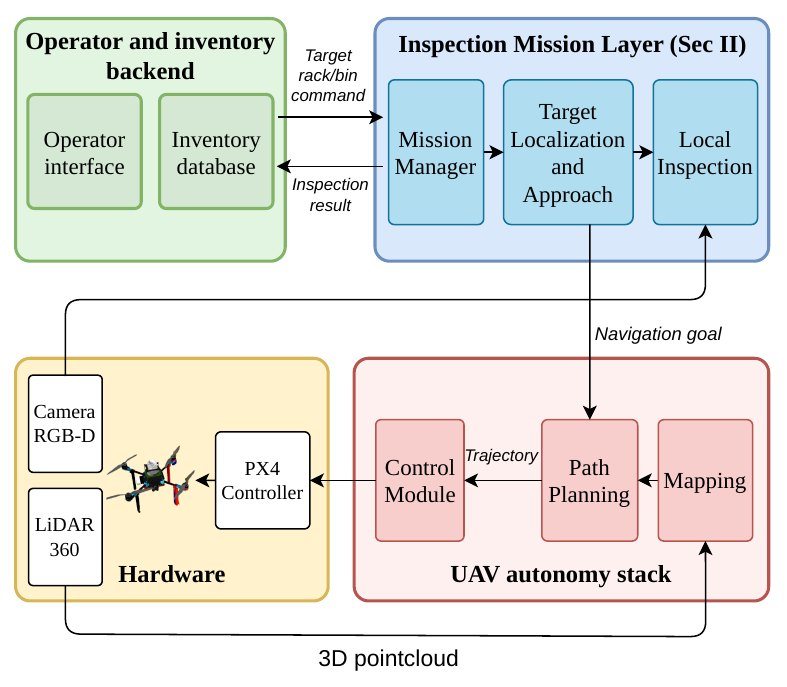
Autonomous unmanned aerial vehicles (UAVs) provide a flexible solution for inventory inspection in indoor warehouses, where GPS signals are often unavailable and storage racks are arranged in narrow aisles. This paper presents an integrated UAV inspection system based on a fiducial-anchored coarse-to-fine strategy. First, the UAV navigates toward the target rack using a LiDAR-based OctoMap and a collision-aware path planner. After reaching the rack area, a rack-level AprilTag is detected and combined with the known rack geometry to estimate the nominal position of the selected bin. Because small position errors can remain after global navigation, a proportional visual-servoing method uses the QR code position in the camera image to refine the final inspection pose before decoding. The system is evaluated in a custom Gazebo warehouse with narrow aisles. Under Point-LIO localization, the proposed method increases the capture success rate from 10.42% to 86.05% of eligible trials and reduces the mean per-axis capture errors to approximately 2.3 cm. Local visual refinement further reduces the image-space alignment error from 212.67 to 24.34 pixels. These simulation results show improved final viewpoint accuracy for UAV inventory inspection in GPS-denied warehouses.

BibTeX
@inproceedings{uav-warehouse-inspection,
  title = {Rack-to-Bin Hierarchical Localization and Visual Refinement for Autonomous UAV Warehouse Inspection},
  author = {Van Tong Nguyen and Thang Tran Viet and Van Bang Nguyen and Xiem HoangVan and Thanh Nguyen Canh},
  booktitle = {RIVF International Conference on Computing and Communication Technologies (RIVF)},
  year = {2026}
}

ConferenceRIVF International Conference on Computing and Communication Technologies (RIVF) · 2026

Lightweight Path-Aware Frontier Re-ranking for LiDAR-Based UAV Exploration

Duc Manh Do, Thanh Nguyen Canh, Ngoc Minh Do, Mai Thanh Thai, Xiem HoangVan

PaperarXivCodeProject
Abstract

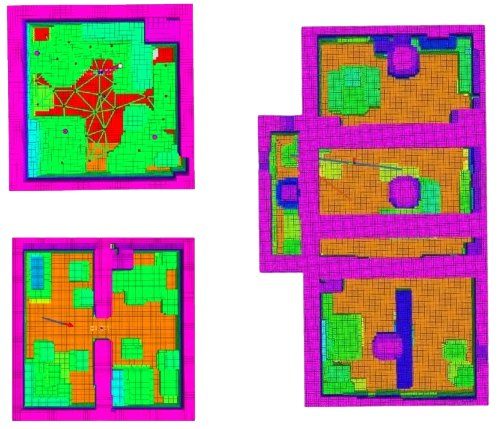
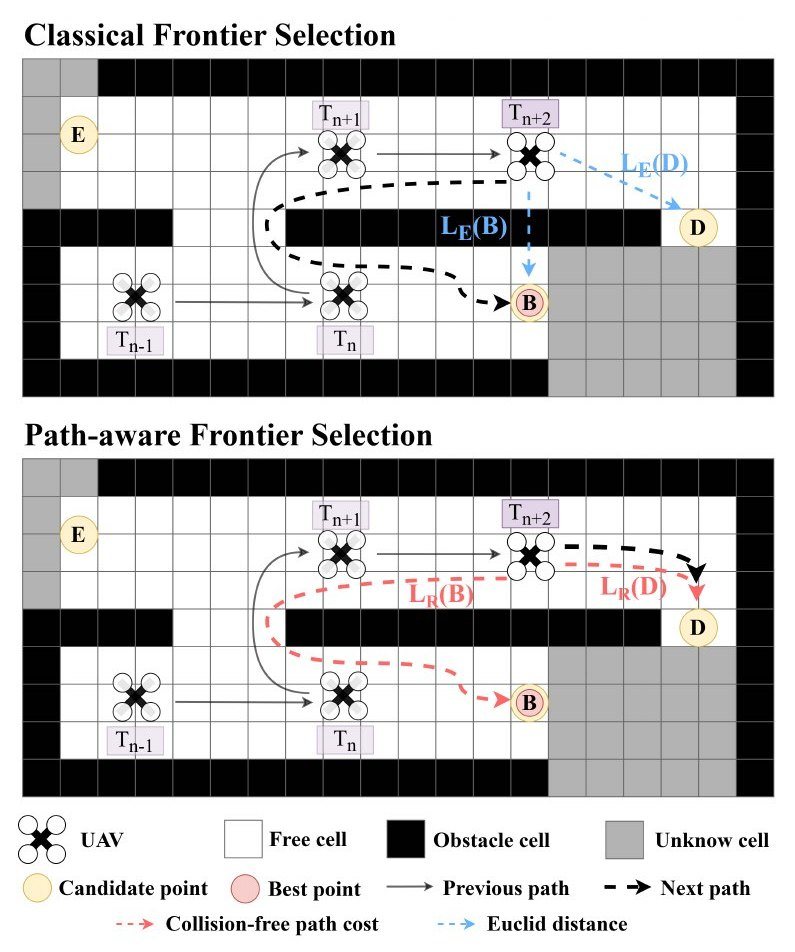
Autonomous 3D exploration with UAVs requires efficient target selection under limited flight time and onboard computation. In conventional Euclidean-distance-based frontier pipelines, geometric distance may poorly represent the actual collision-free travel cost in cluttered environments, leading to inefficient frontier choices. This paper presents a lightweight path-aware frontier re-ranking method for LiDAR-based UAV exploration. The method first retains a small top-N set of promising frontier candidates using a lightweight utility function and then applies time-bounded RRT* planning to estimate their feasible path costs for re-ranking. The path generated for the selected frontier is further reused for navigation to reduce redundant global planning. Experiments in three warehouse-like environments show that the proposed method consistently produces shorter exploration trajectories than conventional frontier baselines, with traveled-distance reductions of up to 14.1%, while reducing exploration time by up to 9.5% in two environments and remaining competitive in the third. The method maintains map detail comparable to the conventional OctoMap-based baseline, demonstrating an effective trade-off between exploration efficiency and mapping quality.

BibTeX
@inproceedings{path-aware-frontier-uav-exploration,
  title = {Lightweight Path-Aware Frontier Re-ranking for LiDAR-Based UAV Exploration},
  author = {Duc Manh Do and Thanh Nguyen Canh and Ngoc Minh Do and Mai Thanh Thai and Xiem HoangVan},
  booktitle = {RIVF International Conference on Computing and Communication Technologies (RIVF)},
  year = {2026}
}

Preprint2026

SR-Platform: An Agentic Pipeline for Natural Language-Driven Robot Simulation Environment Synthesis

Ben Wei Lim, Minh Duc Le, Thang Truong, Thanh Nguyen Canh

PaperarXiv CodeProject
Abstract

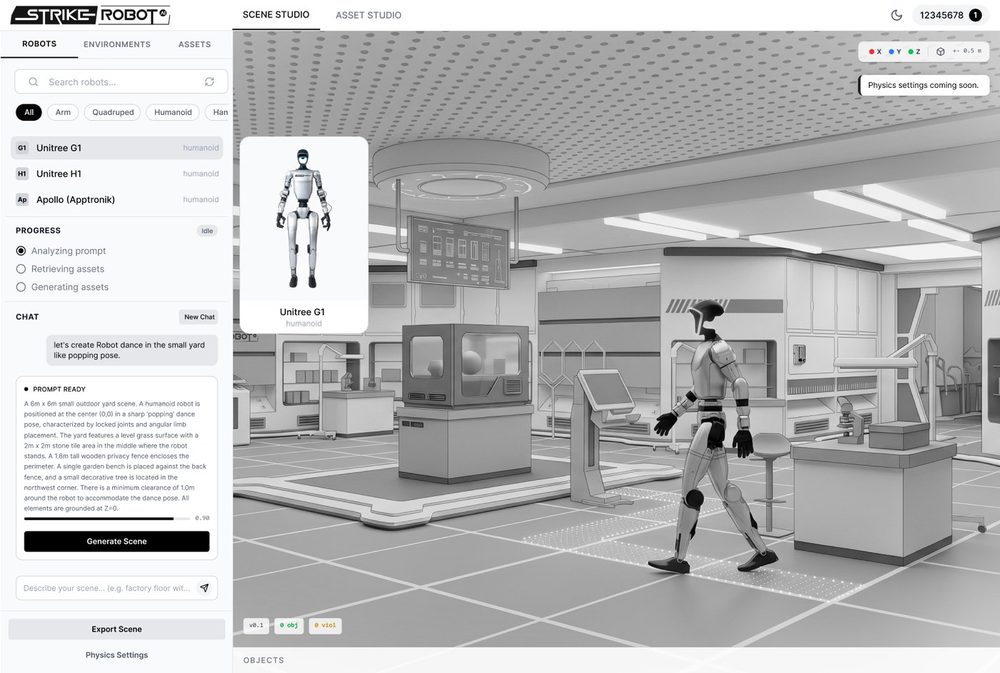
Generating robot simulation environments remains a major bottleneck in simulation-based robot learning. Constructing a training-ready MuJoCo scene typically requires expertise in 3D asset modeling, MJCF specification, spatial layout, collision avoidance, and robot-model integration. We present SR-Platform, a production-deployed agentic system that converts free-form natural language descriptions into executable, physically valid MuJoCo environments. SR-Platform decomposes scene synthesis into four stages: an LLM-based orchestrator that converts user intent into a structured scene plan; an asset forge that retrieves cached assets or generates new 3D geometry through LLM-to-CadQuery synthesis; a layout architect that assigns object poses and verifies industrial constraints; and a bridge layer that assembles the final MJCF scene and merges the selected robot model. The system is deployed as a nine-service Docker stack with WebSocket progress streaming, MinIO-backed mesh storage, Qdrant-based semantic asset retrieval, Redis job state, and InfluxDB telemetry. Using 30 days of production telemetry covering 611 successful LLM calls, SR-Platform generates five-object scenes with a median end-to-end latency of approximately 50 s, while cache-accelerated scenes complete in approximately 30-40 s. The asset forge shows an 11.3% first-attempt retry rate with automatic recovery, and cached asset retrieval removes per-object LLM calls for previously generated object types. These results show that agentic scene synthesis can reduce the manual effort required to create diverse robot training environments, enabling users to produce executable MuJoCo scenes from plain English prompts in under one minute.

BibTeX
@misc{sr-platform,
  title = {SR-Platform: An Agentic Pipeline for Natural Language-Driven Robot Simulation Environment Synthesis},
  author = {Ben Wei Lim and Minh Duc Le and Thang Truong and Thanh Nguyen Canh},
  eprint = {2605.14700},
  archivePrefix = {arXiv},
  note = {Preprint},
  year = {2026}
}

Preprint2026

SafeGuard ASF: SR Agentic Humanoid Robot System for Autonomous Industrial Safety

Thanh Nguyen Canh, Thang Tran Viet, Thanh Tuan Tran, Ben Wei Lim

PaperarXiv CodeProject
Abstract

The rise of unmanned ``dark factories'' operating without human presence demands autonomous safety systems capable of detecting and responding to multiple hazard types. We present SafeGuard ASF (Agentic Security Fleet), a comprehensive framework deploying humanoid robots for autonomous hazard detection in industrial environments. Our system integrates multi-modal perception (RGB-D imaging), a ReAct-based agentic reasoning framework, and learned locomotion policies on the Unitree G1 humanoid platform. We address three critical hazard scenarios: fire and smoke detection, abnormal temperature monitoring in pipelines, and intruder detection in restricted zones. Our perception pipeline achieves 94.2% mAP for fire or smoke detection with 127ms latency. We train multiple locomotion policies, including dance motion tracking and velocity control, using Unitree RL Lab with PPO, demonstrating stable convergence within 80,000 training iterations. We validate our system in both simulation and real-world environments, demonstrating autonomous patrol, human detection with visual perception, and obstacle avoidance capabilities. The proposed ToolOrchestra action framework enables structured decision-making through perception, reasoning, and actuation tools.

BibTeX
@misc{safeguard-asf,
  title = {SafeGuard ASF: SR Agentic Humanoid Robot System for Autonomous Industrial Safety},
  author = {Thanh Nguyen Canh and Thang Tran Viet and Thanh Tuan Tran and Ben Wei Lim},
  eprint = {2603.25353},
  archivePrefix = {arXiv},
  note = {Preprint},
  year = {2026}
}

2025

JournalEngineering Applications of Artificial Intelligence · 2025

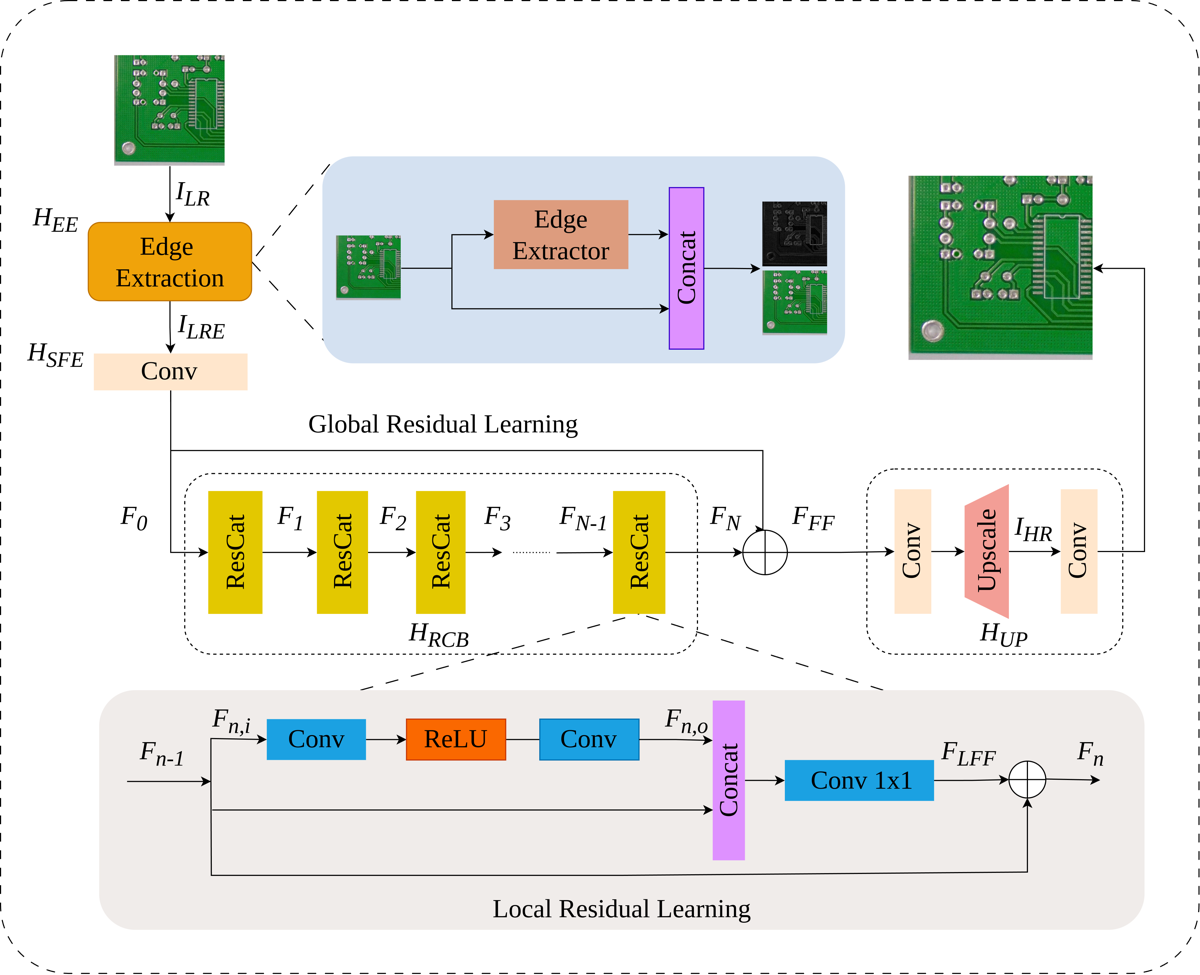
ESRPCB: an Edge guided Super-Resolution model and Ensemble learning for tiny Printed Circuit Board Defect detection

Xiem HoangVan, Dang Bui Dinh, Thanh Nguyen Canh, Van-Truong Nguyen

Abstract

Printed Circuit Boards (PCBs) are critical components in modern electronics, which require stringent quality control to ensure proper functionality. However, the detection of defects in small-scale PCBs images poses significant challenges as a result of the low resolution of the captured images, leading to potential confusion between defects and noise. To overcome these challenges, this paper proposes a novel framework, named ESRPCB (edge-guided super-resolution for PCBs defect detection), which combines edge-guided super-resolution with ensemble learning to enhance PCBs defect detection. Our approach leverages the edge information to guide the EDSR (Enhanced Deep Super-Resolution) model with a novel ResCat (Residual Concatenation) structure, enabling it to reconstruct high-resolution images from small PCBs inputs. By incorporating edge features, the super-resolution process preserves critical structural details, ensuring that tiny defects remain distinguishable in the enhanced image. Following this, a multi-modal defect detection model employs ensemble learning to analyze the super-resolved image, improving the accuracy of defect identification. Experimental results demonstrate that ESRPCB achieves superior performance compared to State-of-the-Art (SOTA) methods. Our model attains an average Peak Signal to Noise Ratio (PSNR) of 30.54 dB(decibel), surpassing EDSR by 0.42dB. In defect detection, ESRPCB achieves a mAP50(mean average precision at an Intersection over Union threshold of 0.50) of 0.965, surpassing EDSR (0.905) and traditional super-resolution models by over 5%. Furthermore, our ensemble-based detection approach further enhances performance, achieving a mAP50 of 0.977. These results highlight the effectiveness of ESRPCB in enhancing both image quality and defect detection accuracy, particularly in challenging low-resolution scenarios.

BibTeX
@article{esrpcb,
  title = {ESRPCB: an Edge guided Super-Resolution model and Ensemble learning for tiny Printed Circuit Board Defect detection},
  author = {Xiem HoangVan and Dang Bui Dinh and Thanh Nguyen Canh and Van-Truong Nguyen},
  journal = {Engineering Applications of Artificial Intelligence},
  doi = {10.1016/j.engappai.2025.111547},
  year = {2025}
}

JournalJournal of Automation, Mobile Robotics and Intelligent Systems (JAMRIS) · 2025

M-Calib: A Monocular 3D Object Localization using 2D Estimates for Industrial Robot Vision System

Thanh Nguyen Canh, Du Ngoc Trinh, Xiem HoangVan

Abstract

3D Object Localization has been emerging recently as one of the challenges of Machine Vision or Robot Vision tasks. In this paper, we proposed a novel method designed for the localization of isometric flat 3D objects, leveraging a blend of deep learning techniques primarily rooted in object detection, postimage processing algorithms, and pose estimation. Our approach involves the strategic application of 3D calibration methods tailored for low-cost industrial robotics systems, requiring only a single 2D image input. Initially, object detection is performed using the You Only Look Once (YOLO) model, followed by segmentation of the object into two distinct parts— the top face and the remainder— using the Mask R-CNN model. Subsequently, the center of the top face serves as the initialization position and a unique combination of postprocessing techniques and a novel calibration algorithm is employed to refine the object’s position. Experimental results demonstrate a notable reduction in localization error by 87.65% when compared to existing methodologies.

BibTeX
@article{m-calib,
  title = {M-Calib: A Monocular 3D Object Localization using 2D Estimates for Industrial Robot Vision System},
  author = {Thanh Nguyen Canh and Du Ngoc Trinh and Xiem HoangVan},
  journal = {Journal of Automation, Mobile Robotics and Intelligent Systems (JAMRIS)},
  doi = {10.14313/jamris-2025-025},
  year = {2025}
}

JournalREV Journal on Electronics and Communications · 2025

E2DSR: Edge-Enhanced Representation for Deep Super-Resolution in Machine Vision Applications

Xiem HoangVan, Long Luong Hai, Thanh Nguyen Canh

Paper arXivCodeProject
Abstract

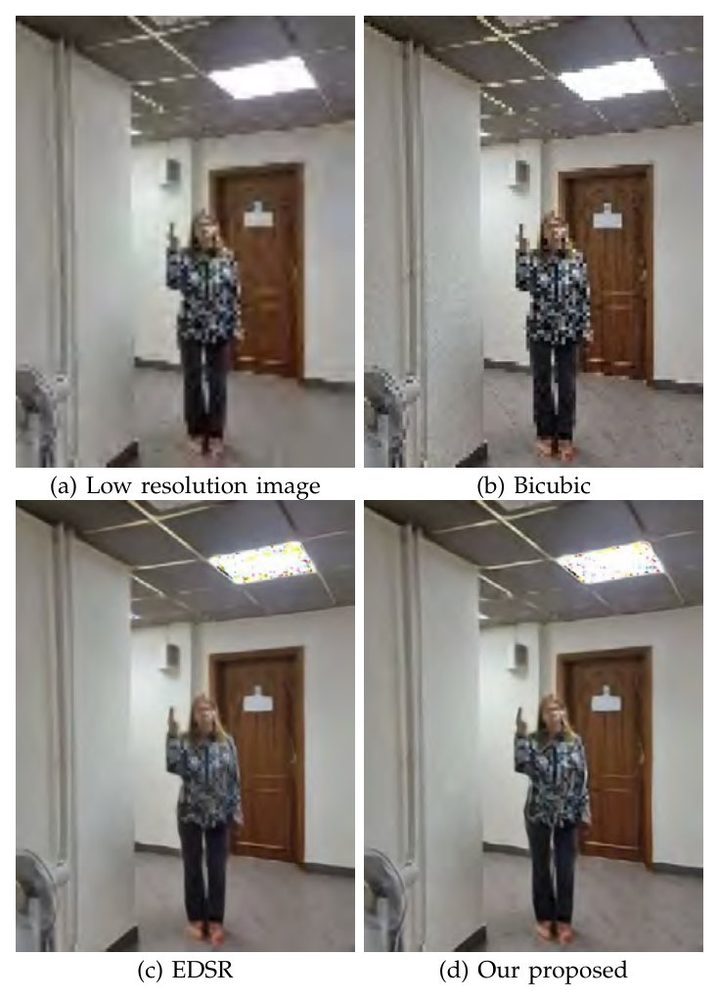
While deep-based super-resolution (SR) has achieved remarkable progress, state-of-the-art models such as EDSR often rely solely on pixel-level information, resulting in overly smooth outputs that often fail to reconstruct the fine-grained edge details essential for downstream machine vision tasks. To address this challenge, we propose the Edge-Enhanced Deep Super-Resolution (E2DSR) model, a task-aware framework that leverages explicit edge guidance to enhance the reconstruction process with high-frequency edge information. E2DSR integrates a novel Edge Feature Enhancement (EFE) Block into a deep residual architecture, which learns to extract and fuse salient edge features from the low-resolution input. We demonstrate the effectiveness of our approach within a gesture recognition, where E2DSR significantly enhances input quality for a state-of-the-art YOLOv10 detector. Experimental results show that our method substantially outperforms the original EDSR and other approaches, increasing the mean average precision (mAP) from 0.776 to 0.822 on average across four representative gesture action types. Our work demonstrates that explicit edge guidance is a crucial component for developing super-resolution models that excel in practical machine vision applications.

BibTeX
@article{e2dsr,
  title = {E2DSR: Edge-Enhanced Representation for Deep Super-Resolution in Machine Vision Applications},
  author = {Xiem HoangVan and Long Luong Hai and Thanh Nguyen Canh},
  journal = {REV Journal on Electronics and Communications},
  doi = {10.21553/rev-jec.427},
  year = {2025}
}

ConferenceEuropean Conference on Mobile Robots (ECMR) · 2025

IRAF-SLAM: An Illumination-Robust and Adaptive Feature-Culling Front-End for Visual SLAM in Challenging Environments

Thanh Nguyen Canh, Bao Nguyen Quoc, HaoLan Zhang, Bupesh Rethinam Veeraiah, Xiem HoangVan, Nak Young Chong

Abstract

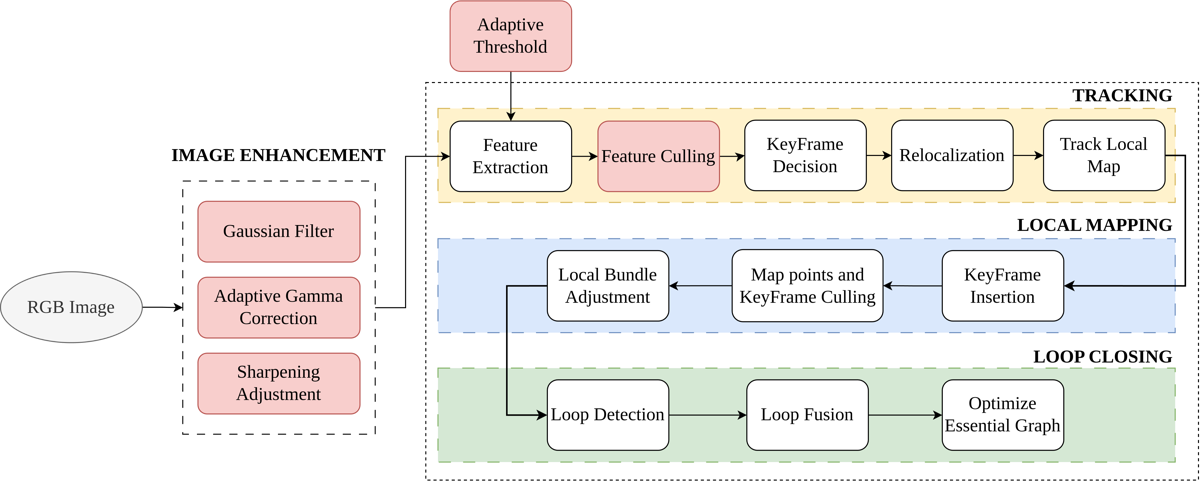
Robust Visual SLAM (vSLAM) is essential for autonomous systems operating in real-world environments, where challenges such as dynamic objects, low texture, and critically, varying illumination conditions often degrade performance. Existing feature-based SLAM systems rely on fixed front-end parameters, making them vulnerable to sudden lighting changes and unstable feature tracking. To address these challenges, we propose "IRAF-SLAM", an Illumination-Robust and Adaptive Feature-Culling front-end designed to enhance vSLAM resilience in complex and challenging environments. Our approach introduces: (1) an image enhancement scheme to preprocess and adjust image quality under varying lighting conditions; (2) an adaptive feature extraction mechanism that dynamically adjusts detection sensitivity based on image entropy, pixel intensity, and gradient analysis; and (3) a feature culling strategy that filters out unreliable feature points using density distribution analysis and a lighting impact factor. Comprehensive evaluations on the TUM and European Robotics Challenge (EuRoC) datasets demonstrate that IRAF-SLAM significantly reduces tracking failures and achieves superior trajectory accuracy compared to state-of-the-art vSLAM methods under adverse illumination conditions. These results highlight the effectiveness of adaptive front-end strategies in improving vSLAM robustness without incurring significant computational overhead.

BibTeX
@inproceedings{iraf-slam,
  title = {IRAF-SLAM: An Illumination-Robust and Adaptive Feature-Culling Front-End for Visual SLAM in Challenging Environments},
  author = {Thanh Nguyen Canh and Bao Nguyen Quoc and HaoLan Zhang and Bupesh Rethinam Veeraiah and Xiem HoangVan and Nak Young Chong},
  booktitle = {European Conference on Mobile Robots (ECMR)},
  doi = {10.1109/ecmr65884.2025.11163050},
  year = {2025}
}

ConferenceInternational Conference on Robotic Computing and Communication (RoboticCC) · 2025

IL-SLAM: Intelligent Line-assisted SLAM Based on Feature Awareness for Dynamic Environments

Haolan Zhang, Thanh Nguyen Canh, Chenghao Li, Ruidong Yang, Yonghoon Ji, Nak Young Chong

Abstract

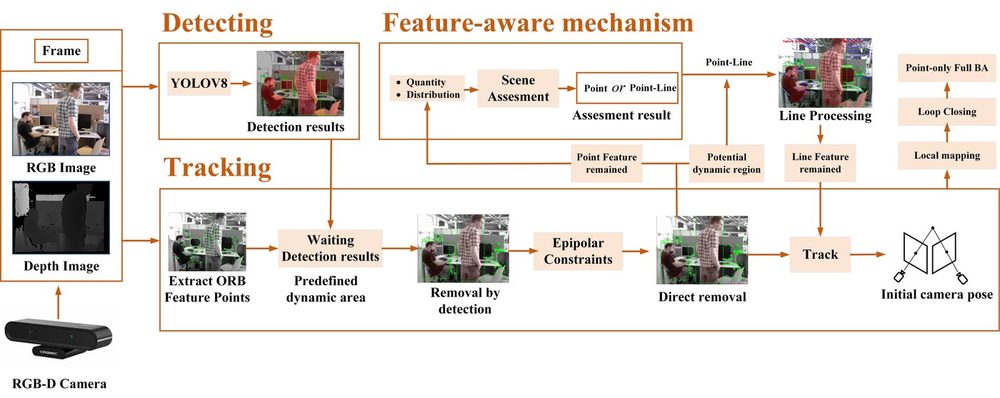
Visual Simultaneous Localization and Mapping (SLAM) plays a crucial role in autonomous systems. Traditional SLAM methods, based on static environment assumptions, struggle to handle complex dynamic environments. Recent dynamic SLAM systems employ geometric constraints and deep learning to remove dynamic features, yet this creates a new challenge: insufficient remaining point features for subsequent SLAM processes. Existing solutions address this by continuously introducing additional line and plane features to supplement point features, achieving robust tracking and pose estimation. However, current methods continuously introduce additional features regardless of necessity, causing two problems: unnecessary computational overhead and potential performance degradation from accumulated low-quality additional features and noise. To address these issues, this paper proposes a feature-aware mechanism that evaluates whether current features are adequate to determine if line feature support should be activated. This decision mechanism enables the system to introduce line features only when necessary, significantly reducing computational complexity of additional features while minimizing the introduction of low-quality features and noise. In subsequent processing, the introduced line features assist in obtaining better initial camera poses through tracking, local mapping, and loop closure, but are excluded from global optimization to avoid potential negative impacts from low-quality additional features in long-term process. Extensive experiments on TUM datasets demonstrate substantial improvements in both ATE and RPE metrics compared to ORB-SLAM3 baseline and superior performance over other dynamic SLAM and multi-feature methods.

BibTeX
@inproceedings{il-slam,
  title = {IL-SLAM: Intelligent Line-assisted SLAM Based on Feature Awareness for Dynamic Environments},
  author = {Haolan Zhang and Thanh Nguyen Canh and Chenghao Li and Ruidong Yang and Yonghoon Ji and Nak Young Chong},
  booktitle = {International Conference on Robotic Computing and Communication (RoboticCC)},
  doi = {10.1109/roboticcc68732.2025.00022},
  year = {2025}
}

ConferenceRIVF International Conference on Computing and Communication Technologies (RIVF) · 2025

Development of a Humanoid Robot Prototype for Multimodal Human-Robot Interaction

Thang Tran Viet, Phuc Dinh Van, Huy Uong Gia, Son Tran Duc, Thanh Nguyen Canh, Xiem HoangVan

Paper arXivCodeProject
Abstract

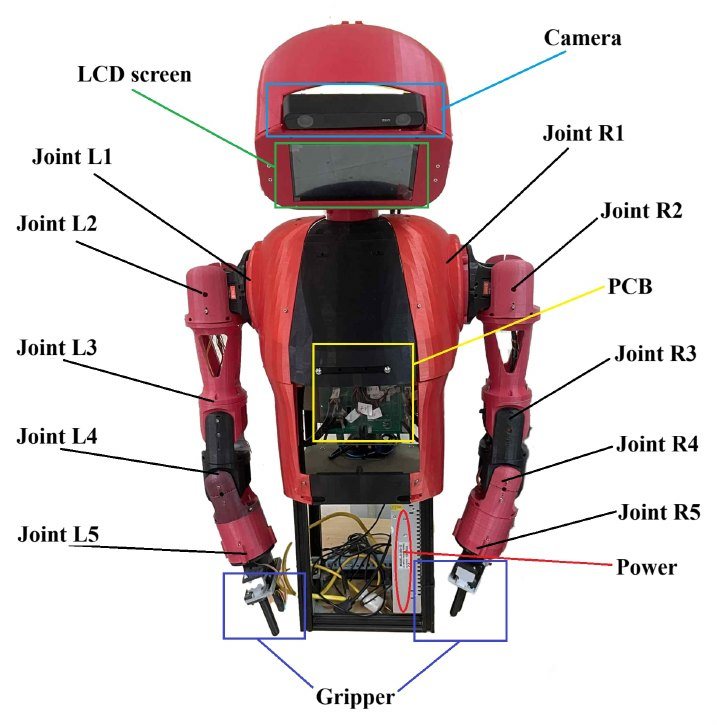
Human-robot interaction (HRI) enables intuitive and intelligent collaboration between humans and robots in real-world environments. This paper introduces a humanoid robot prototype designed as a flexible testbed for developing and integrating artificial intelligence (AI) modules in HRI tasks. The system features a 12 degree-of-freedom (DOF) dual-arm mechanism and a 2 DOFs head with an expressive LCD screen to express facial emotions. All hardware components are controlled by a custom-designed controller board with real-time AI processing supported by an onboard Jetson module. The system incorporates three AI modules: (1) gesture recognition using MediaPipe Pose and an LSTM classifier, (2) object detection with YOLO and 3D localization, and (3) voice-command processing through speech recognition and large language model (LLM)-based semantic parsing. The platform is validated through experiments on positioning accuracy, with results showing average manipulation errors of approximately 1.83 cm. To demonstrate its versatility, experimental results show over 90% task accuracy, with gesture recognition reaching 96%, speech recognition reaching 92%. The results confirm the effectiveness of the proposed system as a reproducible and accessible humanoid platform for research and prototyping in HRI.

BibTeX
@inproceedings{humanoid-gesture-voice-interaction,
  title = {Development of a Humanoid Robot Prototype for Multimodal Human-Robot Interaction},
  author = {Thang Tran Viet and Phuc Dinh Van and Huy Uong Gia and Son Tran Duc and Thanh Nguyen Canh and Xiem HoangVan},
  booktitle = {RIVF International Conference on Computing and Communication Technologies (RIVF)},
  doi = {10.1109/rivf68649.2025.11364526},
  year = {2025}
}

ConferenceInternational Conference on Interactive Collaborative Robotics (ICR) · 2025

Refined 3D Object Localization with Monocular Camera using Depth Estimation and Geometric Refinement

Thanh Nguyen Canh, Quang Minh Trinh, Thai-Viet Dang, Phan Xuan Tan, Xiem HoangVan

Paper arXivCodeProject
Abstract

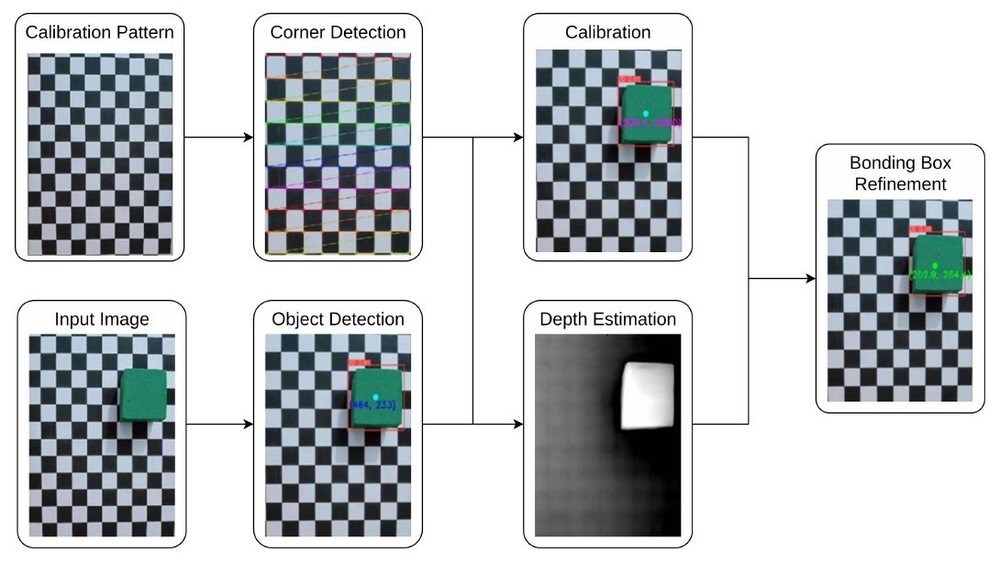
Accurate 3D object localization is a fundamental requirement for applications in industrial robotics, augmented reality, and autonomous navigation. While traditional multi-view systems are precise, their hardware complexity and cost limit widespread adoption. Monocular vision offers a cost-effective alternative but struggles with the inherent challenge of inferring depth from a 2D image, often leading to significant localization errors. This paper presents a novel methodology that overcomes these limitations, achieving high-precision 3D localization using only a single camera. Our proposed framework integrates three synergistic stages. First, a camera calibration process using a checkerboard pattern corrects lens distortion and establishes a real-world metric coordinate system. Second, we employ the YOLOv8 model for real-time 2D object detection and the ZoeDepth network to generate a dense depth map from the monocular input. To mitigate spatial inaccuracies that arise when objects are positioned off-center, we introduce a geometric object position refinement technique. This method adjusts the object’s center based on its projected image coordinates and depth information. Experimental results demonstrate the superiority of our approach, which achieves an average position error of just 4.6mm. This represents a significant 59.29% improvement in localization accuracy compared to using the standalone YOLOv8 detector, showcasing our method’s effectiveness for robust 3D localization.

BibTeX
@inproceedings{refined-monocular-3d-localization,
  title = {Refined 3D Object Localization with Monocular Camera using Depth Estimation and Geometric Refinement},
  author = {Thanh Nguyen Canh and Quang Minh Trinh and Thai-Viet Dang and Phan Xuan Tan and Xiem HoangVan},
  booktitle = {International Conference on Interactive Collaborative Robotics (ICR)},
  doi = {10.1007/978-3-032-11903-2_19},
  year = {2025}
}

ConferenceInternational Conference on Interactive Collaborative Robotics (ICR) · 2025

Efficient Human-Robot Interaction via Deep Perception and flexible Motion Planning

Thanh Nguyen Canh, Thang Tran Viet, Son Tran Duc, Huong Nguyen The, Trang Huyen Dao, Viet-Ha Nguyen, Xiem HoangVan

Paper arXivCodeProject
Abstract

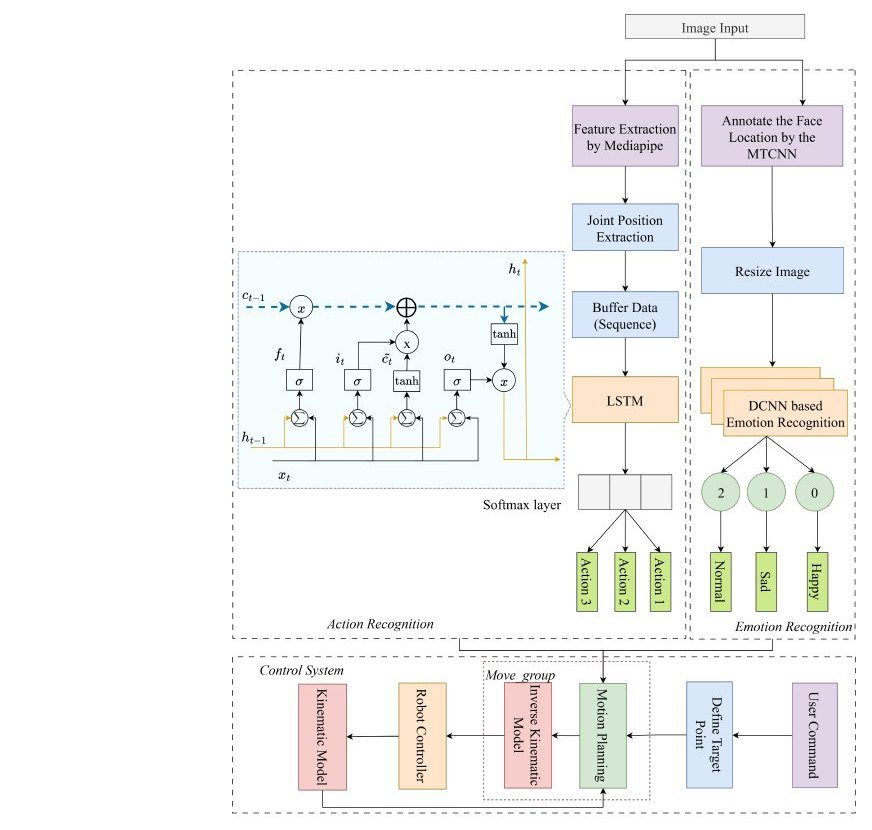
Human-Robot Interaction (HRI) is an emergent field propelled by advancements in artificial intelligence, yet achieving seamless human understanding and responsive robot control remains a significant challenge. This paper introduces an efficient, integrated HRI system for a custom-built dual-arm robot, presenting two primary contributions. First, we propose a sophisticated perception system that leverages deep learning to interpret human states. This system employs a Multi-task Cascaded Convolutional Neural Network (MTCNN) for robust face detection, a Deep Convolutional Neural Network (DCNN) for recognizing emotions, and a Long Short-Term Memory (LSTM) network to identify dynamic gestures from image sequences. Second, we detail a flexible dual-arm robot control system built on the Robot Operating System (ROS). This control system utilizes the Rapidly-exploring Random Tree (RRT) algorithm for efficient path planning, enabling the robot to translate recognized human cues into corresponding actions. Comprehensive evaluations on benchmarks, including the WIDER FACE and FER2013 datasets, validate the perception models. The proposed system was validated through both simulation and physical experiments, demonstrating high accuracy in perception and control. The results highlight the framework’s effectiveness in creating fluid and responsive interactions for complex HRI scenarios.

BibTeX
@inproceedings{efficient-human-robot-interaction,
  title = {Efficient Human-Robot Interaction via Deep Perception and flexible Motion Planning},
  author = {Thanh Nguyen Canh and Thang Tran Viet and Son Tran Duc and Huong Nguyen The and Trang Huyen Dao and Viet-Ha Nguyen and Xiem HoangVan},
  booktitle = {International Conference on Interactive Collaborative Robotics (ICR)},
  doi = {10.1007/978-3-032-11903-2_3},
  year = {2025}
}

ConferenceIEEE International Conference on Real-time Computing and Robotics (RCAR) · 2025

Adaptive Prior Scene-Object SLAM for Dynamic Environments

Haolan Zhang, Thanh Nguyen Canh, Chenghao Li, Nak Young Chong

Abstract

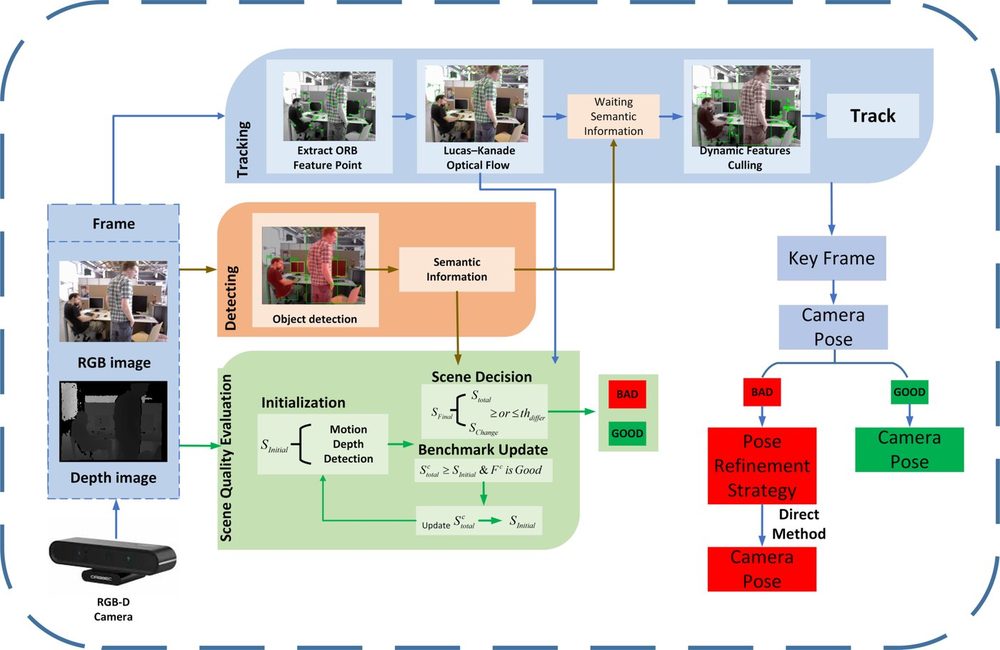
Visual Simultaneous Localization and Mapping (SLAM) plays a vital role in real-time localization for autonomous systems. However, traditional SLAM methods, which assume a static environment, often suffer from significant localization drift in dynamic scenarios. While recent advancements have improved SLAM performance in such environments, these systems still struggle with localization drift, particularly due to abrupt viewpoint changes and poorly characterized moving objects. In this paper, we propose a novel scene-object-based reliability assessment framework that comprehensively evaluates SLAM stability through both current frame quality metrics and scene changes relative to reliable reference frames. Furthermore, to tackle the lack of error correction mechanisms in existing systems when pose estimation becomes unreliable, we employ a pose refinement strategy that leverages information from reliable frames to optimize camera pose estimation, effectively mitigating the adverse effects of dynamic interference. Extensive experiments on the TUM RGB-D datasets demonstrate that our approach achieves substantial improvements in localization accuracy and system robustness under challenging dynamic scenarios.

BibTeX
@inproceedings{adaptive-prior-scene-object-slam,
  title = {Adaptive Prior Scene-Object SLAM for Dynamic Environments},
  author = {Haolan Zhang and Thanh Nguyen Canh and Chenghao Li and Nak Young Chong},
  booktitle = {IEEE International Conference on Real-time Computing and Robotics (RCAR)},
  doi = {10.1109/rcar65431.2025.11139743},
  year = {2025}
}

ConferenceInternational Conference on Intelligent Systems & Networks (ICISN) · 2025

Context-aware LLM-based Human-Robot Interaction

Thanh Nguyen Canh, Kien HoangVan, Xiem HoangVan

PaperarXivCodeProject
Abstract

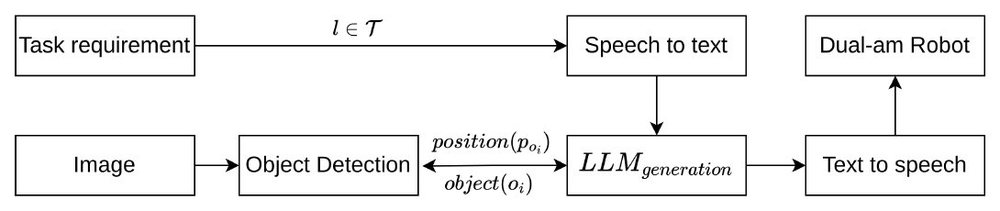
In this work, we propose an effective context-aware framework for human-robot interaction (HRI) that uses large language models (LLM) and state-of-the-art object detection techniques. Our approach integrates ChatGPT as the LLM for interpreting task instructions and generating context-aware responses, while YOLOv8 is employed for robust object detection in dynamic environments. The proposed system interprets spoken task requirements, extracts contextual information, and engages with a dual-arm service robotic system for real-time task execution. We present a comprehensive evaluation of our method, demonstrating significant improvements in task understanding, response accuracy, and adaptability in various interactive scenarios. Experimental results validate the efficacy of our approach in enhancing HRI.

BibTeX
@inproceedings{context-aware-llm-human-robot-interaction,
  title = {Context-aware LLM-based Human-Robot Interaction},
  author = {Thanh Nguyen Canh and Kien HoangVan and Xiem HoangVan},
  booktitle = {International Conference on Intelligent Systems & Networks (ICISN)},
  year = {2025}
}

2024

JournalPublic Transport · 2024

Design of Deep Reinforcement Learning Approach for Traffic Signal Control at Three-way Crossroads

Thanh Nguyen Canh, Anh Pham Tuan, Xiem HoangVan

Abstract

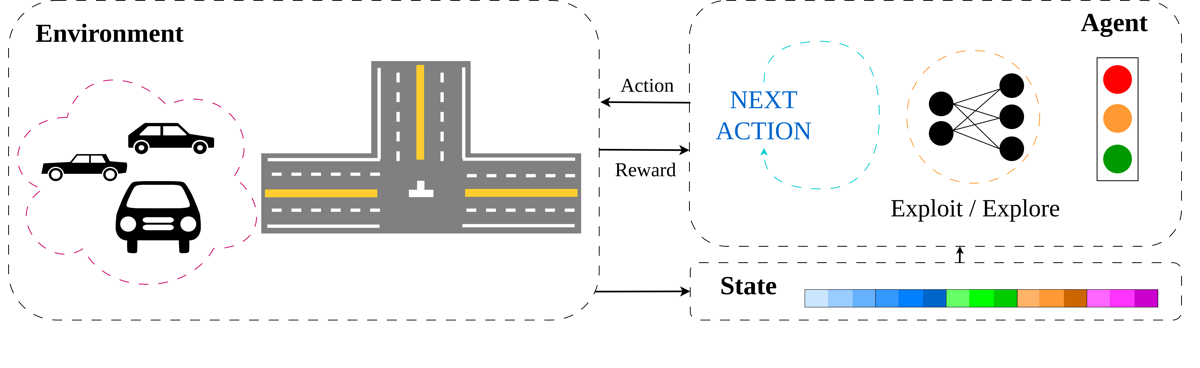
Traffic light control (TSC) is an important and challenging real-world problem with the aim of reducing travel time as well as saving energy. Recent researches have numerous attempts to apply intelligent methods for TSC at four-way crossroads to solve the traffic light scheduling problem. However, there is the limitation of researches on efficient TSC at three-way crossroads. Therefore, this paper introduces a novel TSC solution for three-way crossroad environment (TW-TSC). The proposed TSC method is designed based on a deep reinforcement learning approach, namely Soft Actor-Critic (TWSAC). Firstly, we create a simulation environment for three-way crossroads which consists of numerous transportation and two parallel lanes using Unity framework. Secondly, to achieve practical movements of transportation in three-way crossroads, we carefully design agents which have a high impact to the transportation movement, notably the time to wait for traffic light, the velocity of transportation, and the number of transportation passing successfully. Finally, to achieve TW-TSC efficiency, we propose a novel reward function together with a design of TWSAC algorithm. Experimental results show that the proposed TWSAC in TW-TSC achieves higher performance than both fixed-time TSC methods and relevant RL algorithms.

BibTeX
@article{three-way-traffic-signal-control,
  title = {Design of Deep Reinforcement Learning Approach for Traffic Signal Control at Three-way Crossroads},
  author = {Thanh Nguyen Canh and Anh Pham Tuan and Xiem HoangVan},
  journal = {Public Transport},
  year = {2024}
}

JournalEngineering Science and Technology, an International Journal (JESTECH) · 2024

Optimal design and fabrication of frame structure for dual-arm service robots: An effective approach for human–robot interaction

Thanh Nguyen Canh, Son Tran Duc, Huong Nguyen The, Trang Huyen Dao, Xiem HoangVan

Abstract

Rapid advancement in robotics technology has paved the way for developing mobile service robots capable of human interaction and assistance. In this paper, we propose a comprehensive approach to design, fabricate, and optimize the overall structure of a dual-arm service robot. The conceptual design phase focuses on both critical components, the mobile platform and the manipulation system, essential for seamless navigation and effective task execution. In the proposed system, the distribution of the robot payload in terms of region, maximum stress, and displacement is examined, comprehensively analyzed, and compared with the relevant works. In addition, to enhance the system’s efficiency while minimizing its weight, we introduce a lightweight design approach in which Finite Element Analysis is utilized to optimize the frame structure. Subsequently, we fabricate a physical prototype based on the derived model. Finally, we provide a kinematic model for our dual-arm service robot and demonstrate its efficacy in both control and human–robot interaction (HRI) tasks. Experimental results indicate that the proposed dual arm design can achieve a significant weight reduction of 25% from the original design while still performing actions smoothly for HRI tasks.

BibTeX
@article{dual-arm-service-robot,
  title = {Optimal design and fabrication of frame structure for dual-arm service robots: An effective approach for human–robot interaction},
  author = {Thanh Nguyen Canh and Son Tran Duc and Huong Nguyen The and Trang Huyen Dao and Xiem HoangVan},
  journal = {Engineering Science and Technology, an International Journal (JESTECH)},
  doi = {10.1016/j.jestch.2024.101763},
  year = {2024}
}

ConferenceIEEE/SICE International Symposium on System Integration (SII) · 2024

S3M: Semantic Segmentation Sparse Mapping for UAVs with RGB-D Camera

Thanh Nguyen Canh, Van-Truong Nguyen, Xiem HoangVan, Armagan Elibol, Nak Young Chong

Abstract

This paper presents a novel approach to address challenges in semantic information extraction and utilization within UAV operations. Our system integrates state-of-the-art visual SLAM to estimate a comprehensive 6-DoF pose and advanced object segmentation methods at the back end. To improve the computational and storage efficiency of the framework, we adopt a streamlined voxel-based 3D map representation - OctoMap to build a working system. Furthermore, the fusion algorithm is incorporated to obtain the semantic information of each frame from the front-end SLAM task, and the corresponding point. By leveraging semantic information, our framework enhances the UAV's ability to perceive and navigate through indoor spaces, addressing challenges in pose estimation accuracy and uncertainty reduction. Through Gazebo simulations, we validate the efficacy of our proposed system and successfully embed our approach into a Jetson Xavier AGX unit for real-world applications.

BibTeX
@inproceedings{s3m,
  title = {S3M: Semantic Segmentation Sparse Mapping for UAVs with RGB-D Camera},
  author = {Thanh Nguyen Canh and Van-Truong Nguyen and Xiem HoangVan and Armagan Elibol and Nak Young Chong},
  booktitle = {IEEE/SICE International Symposium on System Integration (SII)},
  doi = {10.1109/sii58957.2024.10417379},
  year = {2024}
}

ConferenceInternational Conference on Control, Automation and Systems (ICCAS) · 2024

Toward Integrating Semantic-aware Path Planning and Reliable Localization for UAV Operations

Thanh Nguyen Canh, Huy-Hoang Ngo, Xiem HoangVan, Nak Young Chong

Abstract

Localization is one of the most crucial tasks for Unmanned Aerial Vehicle systems (UAVs) directly impacting overall performance, which can be achieved with various sensors and applied to numerous tasks related to search and rescue operations, object tracking, construction, etc. However, due to the negative effects of challenging environments, UAVs may lose signals for localization. In this paper, we present an effective path-planning system leveraging semantic segmentation information to navigate around texture-less and problematic areas like lakes, oceans, and high-rise buildings using a monocular camera. We introduce a real-time semantic segmentation architecture and a novel keyframe decision pipeline to optimize image inputs based on pixel distribution, reducing processing time. A hierarchical planner based on the Dynamic Window Approach (DWA) algorithm, integrated with a cost map, is designed to facilitate efficient path planning. The system is implemented in a photo-realistic simulation environment using Unity, aligning with segmentation model parameters. Comprehensive qualitative and quantitative evaluations validate the effectiveness of our approach, showing significant improvements in the reliability and efficiency of UAV localization in challenging environments.

BibTeX
@inproceedings{reliable-uav-localization,
  title = {Toward Integrating Semantic-aware Path Planning and Reliable Localization for UAV Operations},
  author = {Thanh Nguyen Canh and Huy-Hoang Ngo and Xiem HoangVan and Nak Young Chong},
  booktitle = {International Conference on Control, Automation and Systems (ICCAS)},
  doi = {10.23919/iccas63016.2024.10773342},
  year = {2024}
}

ConferenceInternational Conference on Control, Automation and Systems (ICCAS) · 2024

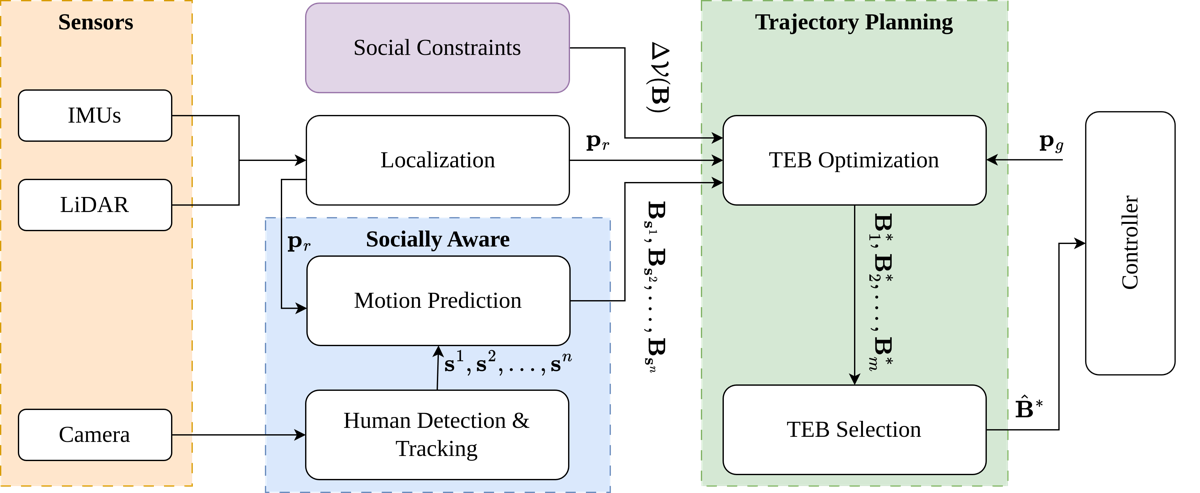
Enhancing Social Robot Navigation with Integrated Motion Prediction and Trajectory Planning in Dynamic Human Environments

Thanh Nguyen Canh, Xiem HoangVan, Nak Young Chong

Abstract

Navigating safely in dynamic human environments is crucial for mobile service robots, and social navigation is a key aspect of this process. In this paper, we proposed an integrative approach that combines motion prediction and trajectory planning to enable safe and socially-aware robot navigation. The main idea of the proposed method is to leverage the advantages of Socially Acceptable trajectory prediction and Timed Elastic Band (TEB) by incorporating human interactive information including position, orientation, and motion into the objective function of the TEB algorithms. In addition, we designed social constraints to ensure the safety of robot navigation. The proposed system is evaluated through physical simulation using both quantitative and qualitative metrics, demonstrating its superior performance in avoiding human and dynamic obstacles, thereby ensuring safe navigation.

BibTeX
@inproceedings{social-robot-navigation,
  title = {Enhancing Social Robot Navigation with Integrated Motion Prediction and Trajectory Planning in Dynamic Human Environments},
  author = {Thanh Nguyen Canh and Xiem HoangVan and Nak Young Chong},
  booktitle = {International Conference on Control, Automation and Systems (ICCAS)},
  doi = {10.23919/iccas63016.2024.10773156},
  year = {2024}
}

ConferenceInternational Conference on System Science and Engineering (ICSSE) · 2024

Underwater Image Enhancement for Depth Estimation via Various Image Processing Techniques

Thanh Nguyen Canh, M. DoNgoc, T. N. Quang, H. B. Thanh, Xiem HoangVan

Paper arXivCodeProject
Abstract

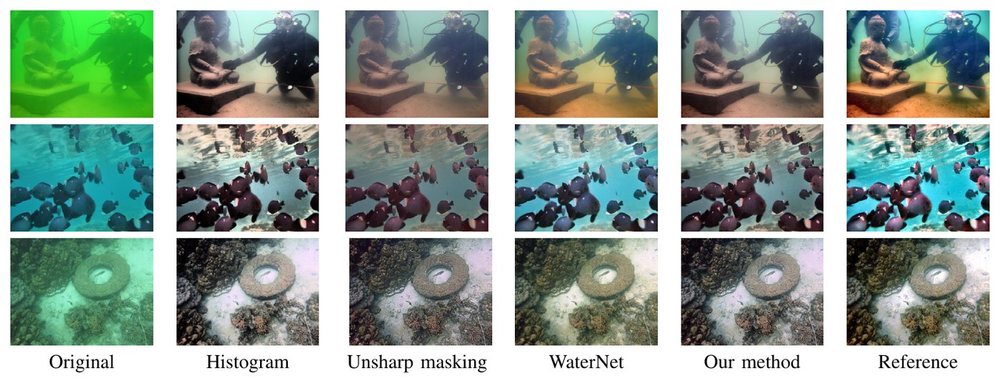
Depth estimation is crucial for autonomous underwater vehicles (AUVs) to navigate effectively and understand their surroundings. While deep neural networks offer promising solutions for depth estimation, their efficacy in challenging underwater environments—characterized by low light conditions and noise—is limited. To address this challenge, this paper proposes a method to enhance underwater image quality, thereby bolstering the accuracy of depth estimation. The approach involves preprocessing underwater images using color compensation and light balancing techniques, alongside contrast and sharpness enhancements. Subsequently, depth estimation is performed utilizing the Udepth model on the enhanced images. The efficacy and accuracy of the proposed method are evaluated and presented, demonstrating its potential to enhance depth image quality for underwater robotics applications.

BibTeX
@inproceedings{underwater-image-enhancement,
  title = {Underwater Image Enhancement for Depth Estimation via Various Image Processing Techniques},
  author = {Thanh Nguyen Canh and M. DoNgoc and T. N. Quang and H. B. Thanh and Xiem HoangVan},
  booktitle = {International Conference on System Science and Engineering (ICSSE)},
  doi = {10.1109/icsse61472.2024.10608973},
  year = {2024}
}

ConferenceInternational Conference on Mechatronic, Automobile, and Environment Engineering (ICMAEE) · 2024

Fusion LiDAR-Inertial-Encoder data for High-Accuracy SLAM

Manh Do Duc, Thanh Nguyen Canh, Minh DoNgoc, Xiem HoangVan

PaperarXiv CodeProject
Abstract

In the realm of robotics, achieving simultaneous localization and mapping (SLAM) is paramount for autonomous navigation, especially in challenging environments like texture-less structures. This paper proposed a factor-graph-based model that tightly integrates IMU and encoder sensors to enhance positioning in such environments. The system operates by meticulously evaluating the data from each sensor. Based on these evaluations, weights are dynamically adjusted to prioritize the more reliable source of information at any given moment. The robot's state is initialized using IMU data, while the encoder aids motion estimation in long corridors. Discrepancies between the two states are used to correct IMU drift. The effectiveness of this method is demonstrably validated through experimentation. Compared to Karto SLAM, a widely used SLAM algorithm, this approach achieves an improvement of 26.98% in rotation angle error and 67.68% reduction in position error. These results convincingly demonstrate the method's superior accuracy and robustness in texture-less environments.

BibTeX
@inproceedings{fusion-lidar-inertial-encoder,
  title = {Fusion LiDAR-Inertial-Encoder data for High-Accuracy SLAM},
  author = {Manh Do Duc and Thanh Nguyen Canh and Minh DoNgoc and Xiem HoangVan},
  booktitle = {International Conference on Mechatronic, Automobile, and Environment Engineering (ICMAEE)},
  year = {2024}
}

2023

ConferenceIEEE International Conference on Control, Automation and Information Sciences (ICCAIS) · 2023

Object-Oriented Semantic Mapping for Reliable UAVs Navigation

Thanh Nguyen Canh, Armagan Elibol, Nak Young Chong, Xiem HoangVan

Abstract

To autonomously navigate in real-world environments, special in search and rescue operations, Unmanned Aerial Vehicles (UAVs) necessitate comprehensive maps to ensure safety. However, the prevalent metric map often lacks semantic information crucial for holistic scene comprehension. In this paper, we proposed a system to construct a probabilistic metric map enriched with object information extracted from the environment from RGB-D images. Our approach combines a state-of-the-art YOLOv8-based object detection framework at the front end and a 2D SLAM method - CartoGrapher at the back end. To effectively track and position semantic object classes extracted from the front-end interface, we employ the innovative BoT-SORT methodology. A novel association method is introduced to extract the position of objects and then project it with the metric map. Unlike previous research, our approach takes into reliable navigating in the environment with various hollow bottom objects. The output of our system is a probabilistic map, which significantly enhances the map's representation by incorporating object-specific attributes, encompassing class distinctions, accurate positioning, and object heights. A number of experiments have been conducted to evaluate our proposed approach. The results show that the robot can effectively produce augmented semantic maps containing several objects (notably chairs and desks). Furthermore, our system is evaluated within an embedded computer - Jetson Xavier AGX unit to demonstrate the use case in real-world applications.

BibTeX
@inproceedings{object-oriented-semantic-mapping,
  title = {Object-Oriented Semantic Mapping for Reliable UAVs Navigation},
  author = {Thanh Nguyen Canh and Armagan Elibol and Nak Young Chong and Xiem HoangVan},
  booktitle = {IEEE International Conference on Control, Automation and Information Sciences (ICCAIS)},
  doi = {10.1109/iccais59597.2023.10382351},
  year = {2023}
}

ConferenceIEEE International Conference on Research, Innovation and Vision for the Future (RIVF) · 2023

Machine Learning-Based Malicious Vehicle Detection for Security Threats and Attacks in Vehicle Ad-hoc Network (VANET) Communications

Thanh Nguyen Canh, Xiem HoangVan

Abstract

With the rapid growth of Vehicle Ad-hoc Network (VANET) as a promising technology for efficient and reliable communication among vehicles and infrastructure, the security and integrity of VANET communications has become a critical concern. One of the significant threats to VANET is the presence of blackhole attacks, where malicious nodes disrupt the network's functionality and compromise data confidentiality, integrity, and availability. In this paper, we propose a machine learning-based approach for blackhole detection in VANET. To achieve this task, we first create a comprehensive dataset comprising normal and malicious traffic flows. Afterward, we study and define a promising set of features to discriminate the blackhole attacks. Finally, we evaluate various machine learning algorithms, including Gradient Boosting, Random Forest, Support Vector Machines, k-Nearest Neighbors, Gaussian Naive Bayes, and Logistic Regression. Experimental results demonstrate the effectiveness of these algorithms in distinguishing between normal and malicious nodes. Our findings also highlight the potential of machine learning based approach in enhancing the security of VANET by detecting and mitigating blackhole attacks.

BibTeX
@inproceedings{malicious-vehicle-detection,
  title = {Machine Learning-Based Malicious Vehicle Detection for Security Threats and Attacks in Vehicle Ad-hoc Network (VANET) Communications},
  author = {Thanh Nguyen Canh and Xiem HoangVan},
  booktitle = {IEEE International Conference on Research, Innovation and Vision for the Future (RIVF)},
  doi = {10.1109/rivf60135.2023.10471804},
  year = {2023}
}

2022

ConferenceIEEE International Conference on Control, Automation and Information Sciences (ICCAIS) · 2022

Multisensor Data Fusion for Reliable Obstacle Avoidance

Thanh Nguyen Canh, Truong Son Nguyen, Cong Hoang Quach, Xiem HoangVan, Manh Duong Phung

Abstract

In this work, we propose a new approach that combines data from multiple sensors for reliable obstacle avoidance. The sensors include two depth cameras and a LiDAR arranged so that they can capture the whole 3D area in front of the robot and a 2D slide around it. To fuse the data from these sensors, we first use an external camera as a reference to combine data from two depth cameras. A projection technique is then introduced to convert the 3D point cloud data of the cameras to its 2D correspondence. An obstacle avoidance algorithm is then developed based on the dynamic window approach. A number of experiments have been conducted to evaluate our proposed approach. The results show that the robot can effectively avoid static and dynamic obstacles of different shapes and sizes in different environments.

BibTeX
@inproceedings{multisensor-data-fusion,
  title = {Multisensor Data Fusion for Reliable Obstacle Avoidance},
  author = {Thanh Nguyen Canh and Truong Son Nguyen and Cong Hoang Quach and Xiem HoangVan and Manh Duong Phung},
  booktitle = {IEEE International Conference on Control, Automation and Information Sciences (ICCAIS)},
  doi = {10.1109/iccais56082.2022.9990495},
  year = {2022}
}